




These are the stunning landmarks from the UAE with striking architecture
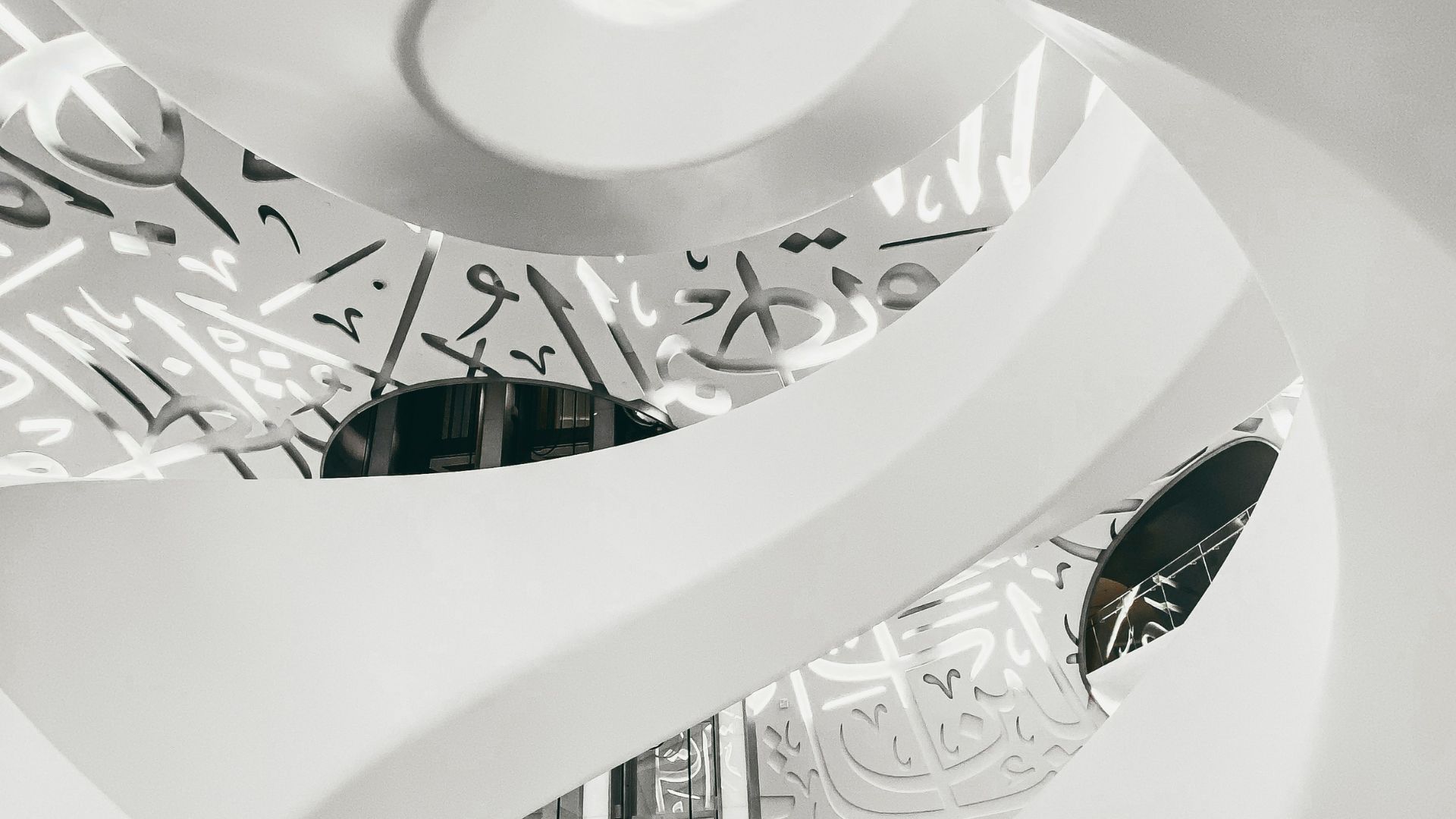



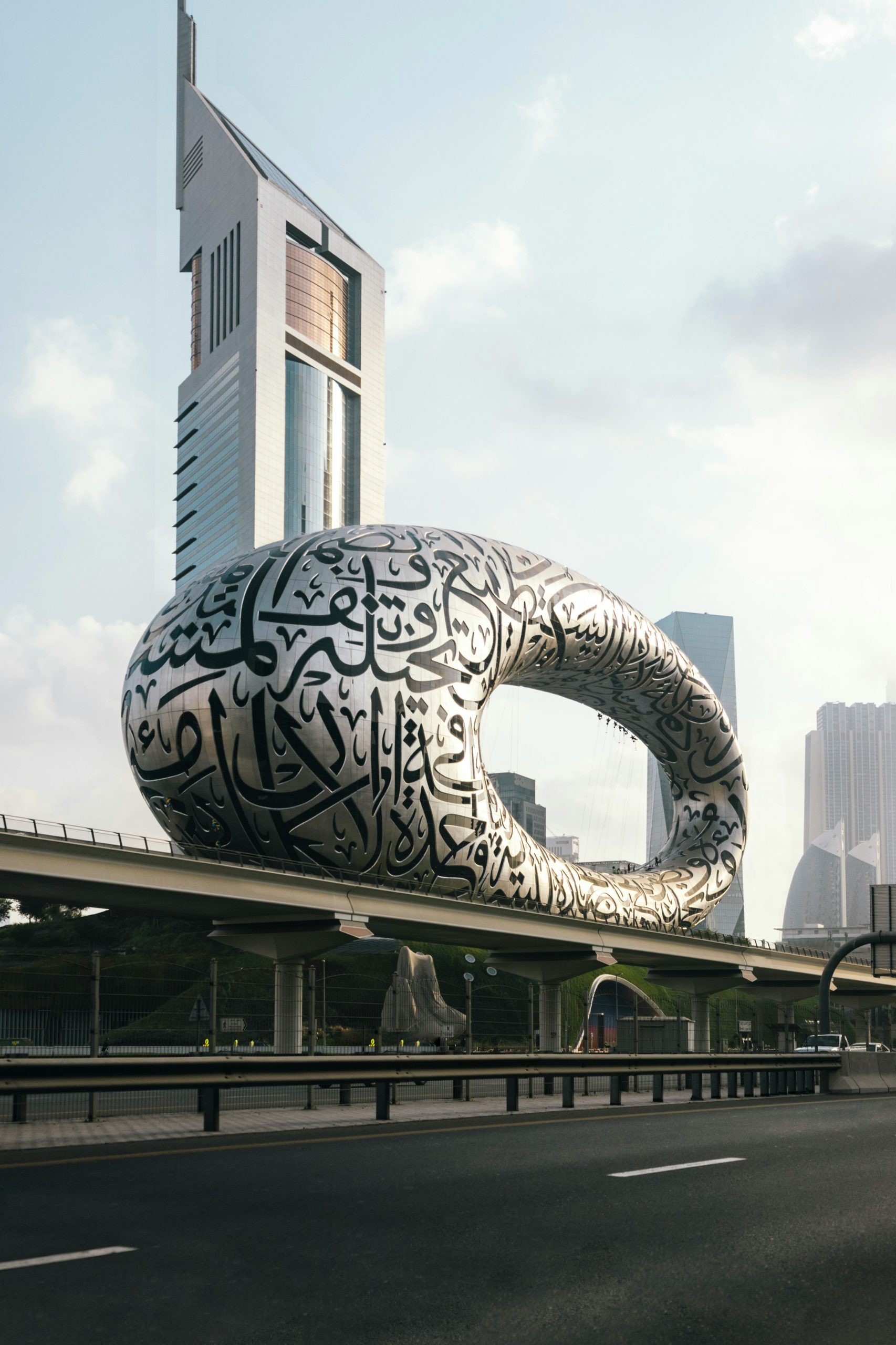
The evocative torus-shaped structure of the Museum of the Future in Dubai, an unmissable structure that opened in Downtown Dubai in February 2022, has become one of the city’s architectural masterpieces, symbolizing humanity’s capacity to continuously innovative – one of Dubai’s defining characteristics. Designed by Killa Design, the building features a green hill representing the earth, symbolizing permanence, its stainless-steel structure represents humanity or strength and the central void for which it is known reflects the idea of surrendering to the unknown future and the exciting opportunities it will bring. Covering the façade of the building is Arabic calligraphy acting as glass windows, presenting quotes on the idea of the future by Sheikh Mohammed bin Rashed Al Maktoum, Prime Minister of the United Arab Emirates. One notable one reads: “We might not live for hundreds of years, but the products of our creativity can leave a legacy long after we are gone.”
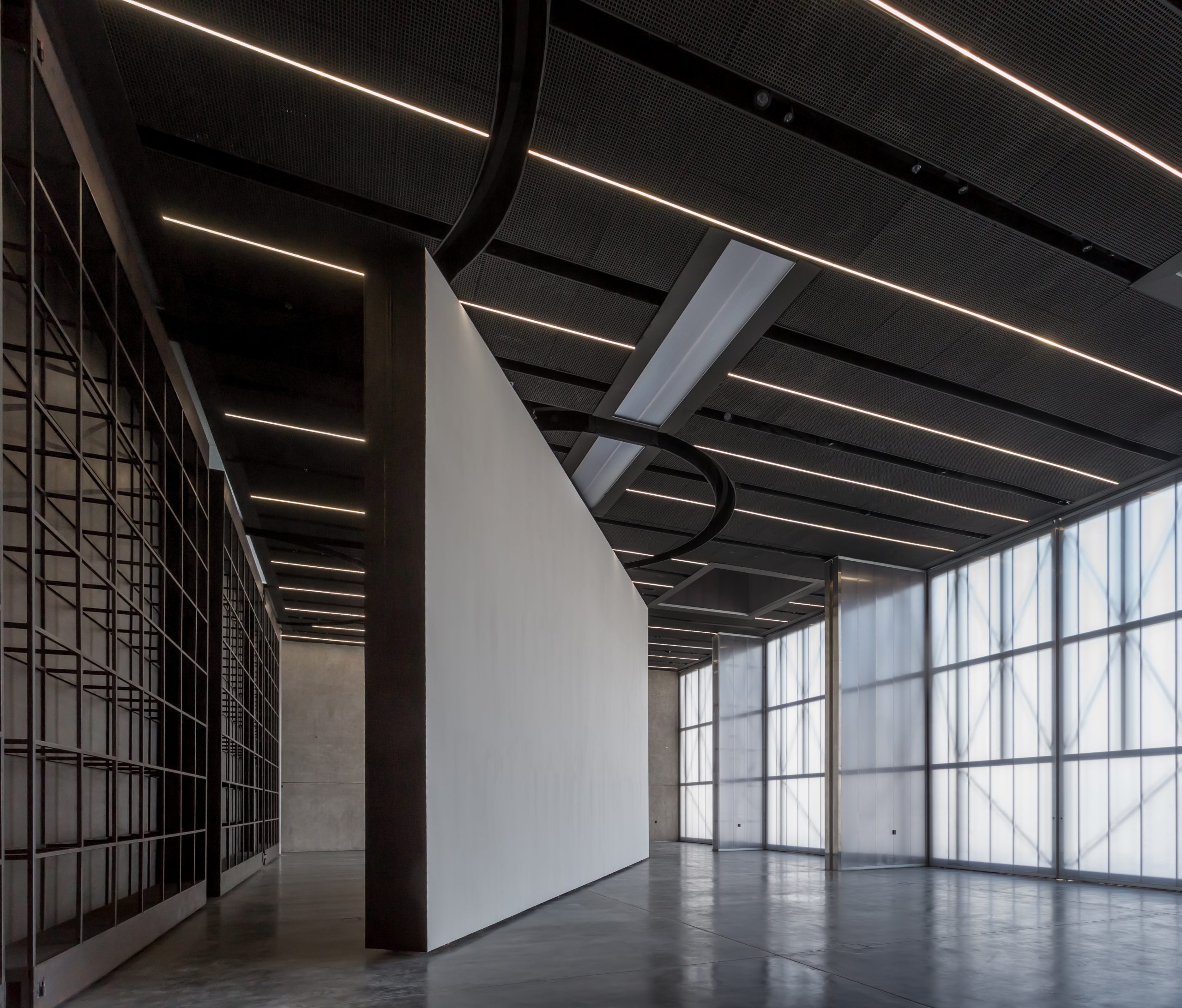
Situated in the heart of Alserkal Avenue, Concrete is a 1,250-square-meter multi-disciplinary space for museum-grade exhibitions, performances and cultural exchange, designed by Office for Metropolitan Architecture (OMA), founded by Pritzker Prize-winning architect Rem Koolhaas. Comprising four combined warehouses that have been repurposed to create a museum-grade space with the capacity for multiple configurations, Concrete’s modular capacity stems from its movable walls, allowing for up to 15 layout configurations. “Concrete was our first built project in the UAE,” said Kaveh Dabiri, an Associate at OMA. “Nine years later, we look back with great satisfaction at the diversity of exhibitions and public events it has hosted, and the contribution it has made to Dubai’s cultural landscape. Highly adaptable, almost machine-like, it has consistently performed as intended since completion.”
Cinematic in scale, since it opened in March 2017, Concrete has hosted dance performances, international and regional art exhibitions, conferences and activations. It reflects Dubai’s forward-thinking, all-inclusive and innovative character, grounded in quality and respective for diverse cultures. In 2019, Concrete became the first building in Dubai to be shortlisted for the prestigious Aga Khan Award for Architecture.
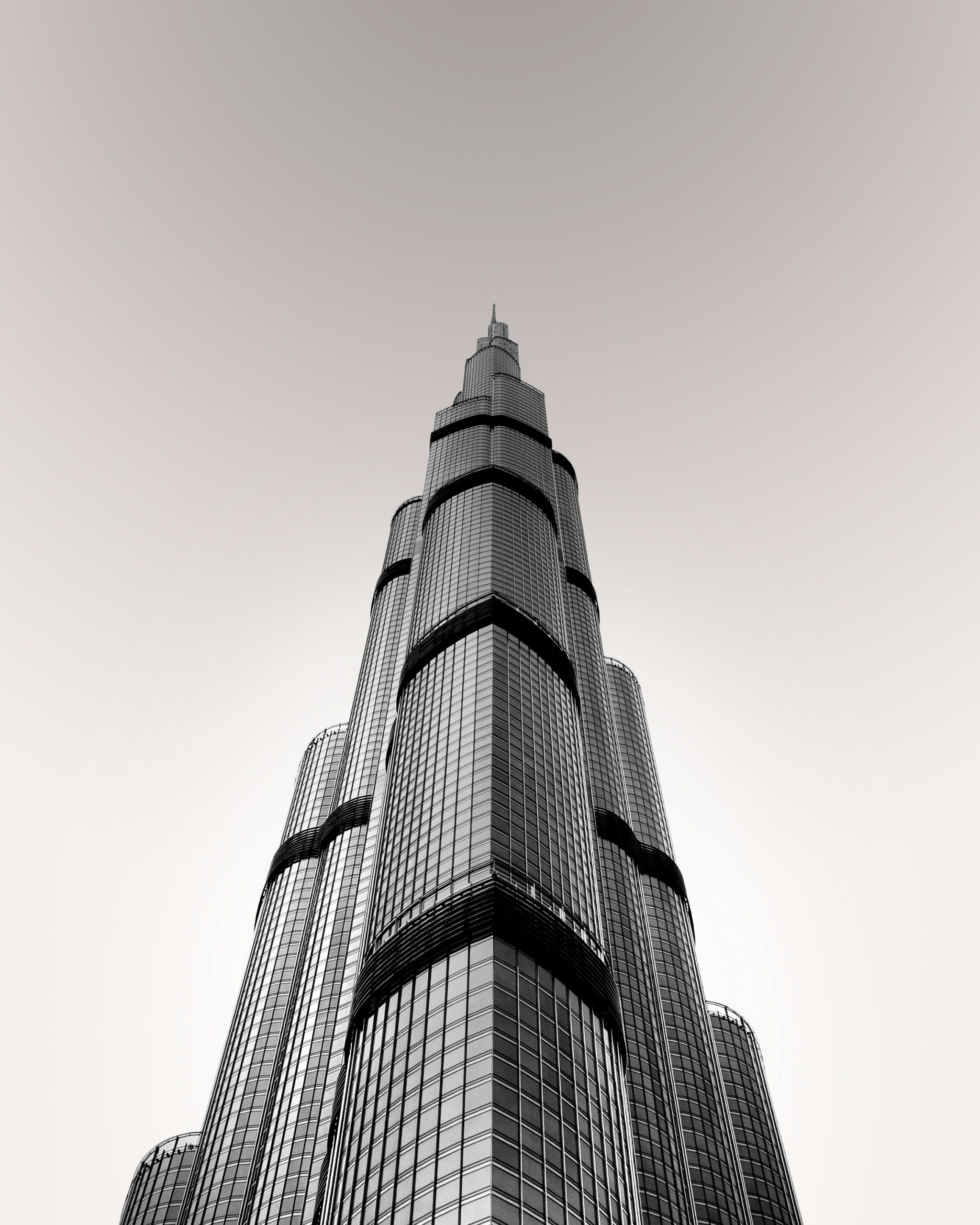
Shooting up into the sky as if there were no limits, the 828-meters tall Burj Khalifa is the world’s tallest building. With 200 stories, 160 of which are inhabitable, the building, inaugurated in January 2010 and located in Downtown Dubai, represents the United Arab Emirates’ transformation from an oil-based economy to a tourism-based, technologically advanced, highly innovative and entrepreneurial society. “We in the United Arab Emirates have no such word as ‘impossible.’ It does not exist in our lexicon,” Sheikh Mohammed bin Rashid Al Maktoum, is often quoted in reference to the tower’s emblematic representation of human ambition against all odds. Designed by Skidmore, Owings & Merrill with architect Adrian Smith, the tower’s Y-shaped plan mirrors the Hymenocallis flower, a regional desert flower, and incorporates geometric patterns from Islamic architecture. The Burj Khalifa’s core rises, surrounded by three wings that act like flower petals, offering stability and a sophisticated aesthetic. Outside of their elegant appearance, the three wings reduce wind forces and maximise views of the Gulf. The tower was conceived by Emaar Properties, a leading Emirati real estate company, as a “symbol of hope” for the Arab world, showcasing economic and social progress. The tower, since its launch, has become one of Dubai’s most recognisable symbols.
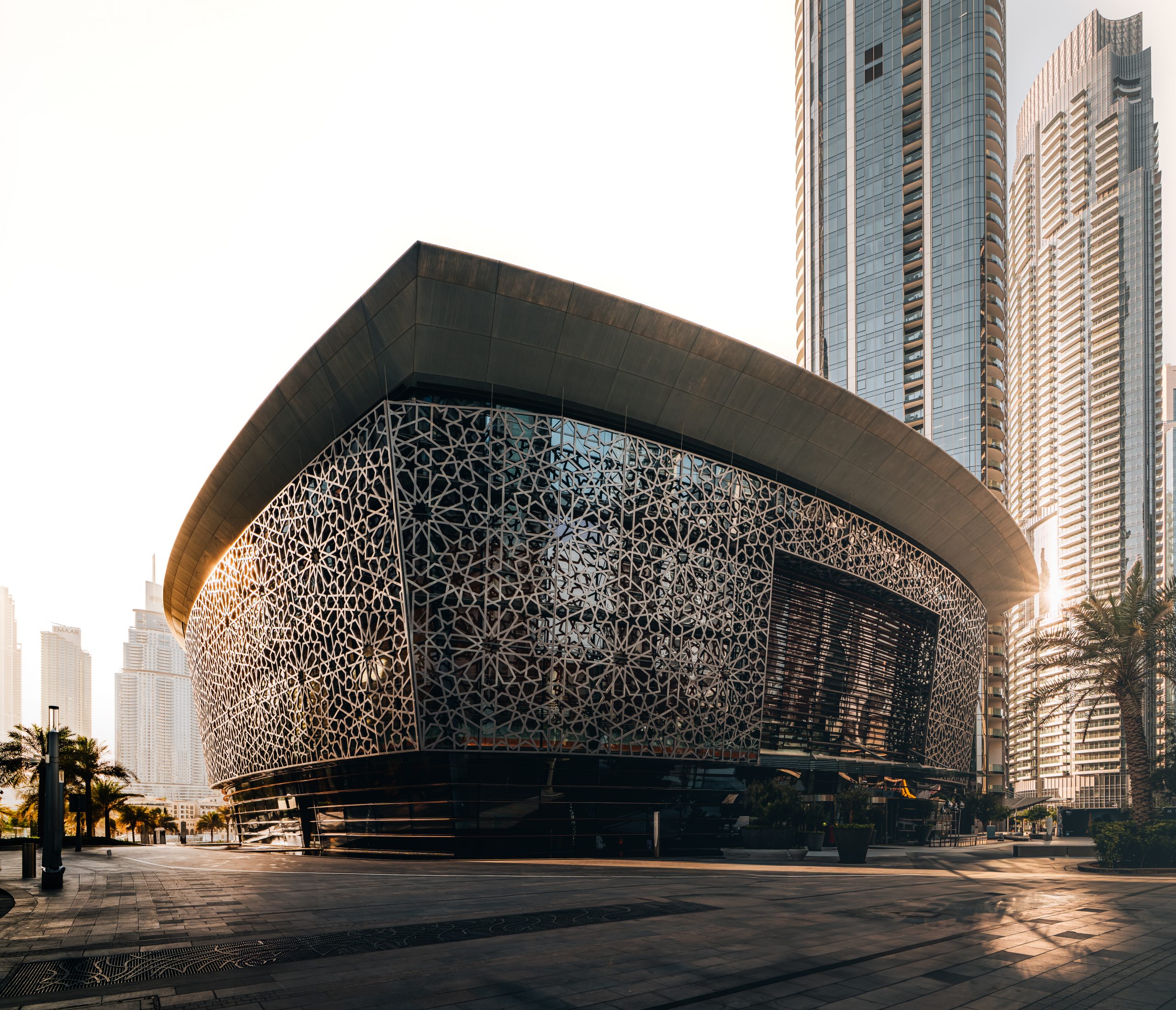
Designed in the shaped of an iconic dhow, a traditional Arabian sailing vessel, since its launch in August 2016, the Dubai Opera has become one of the city’s most recognisable architectural icons. Located in Downtown Dubai and designed by Atkins and lead architect Janus Rostock, the 2,000-seat, multi-format venue features a flexible, high-performance design that transforms into three sections: a theatre, concert hall, and a flat-floor event space.
“Dubai Opera stands as a defining symbol of the city’s cultural ambition: an architectural landmark inspired by Dubai’s maritime heritage, yet shaped for a global future,” said Head of Dubai Opera, Paolo Petrocelli.
“More than a venue, it is a platform where cultures meet, ideas are exchanged, and artistic excellence finds a home in the region. As a cultural institution, we see our role not only in presenting world-class performances, but in fostering connection, dialogue, and shared experiences. Especially in challenging times, Dubai Opera reaffirms the enduring value of the arts as a unifying force, reflecting the openness, resilience, and forward-looking spirit of Dubai.”
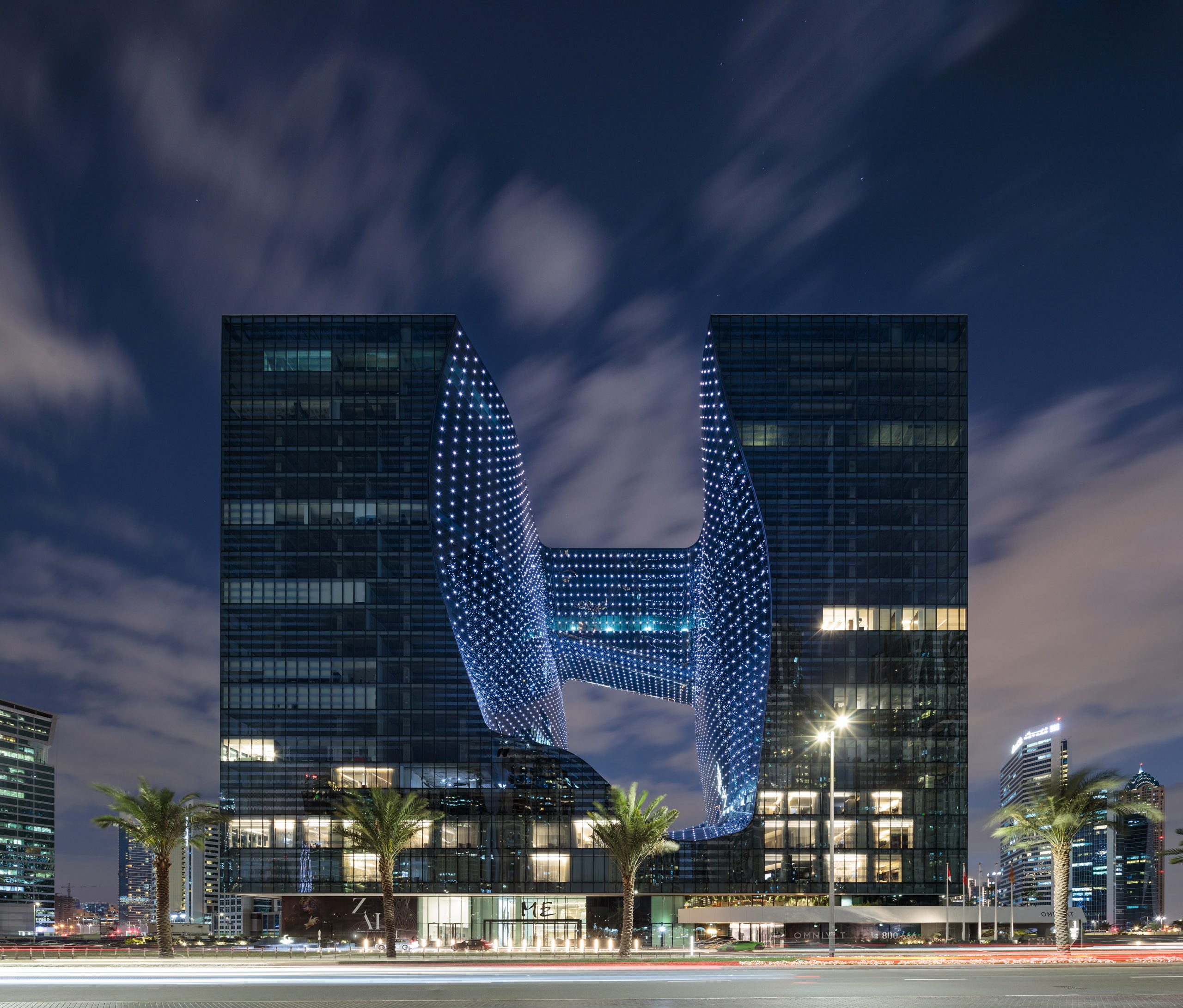
Conceived as two distinct towers that effortlessly coalesce into a singular, sculptural anamorphic form with a pronounced architectural void carved at its center, The Opus by OMNIYAT is one of Dubai’s most distinct newer architectural landmarks. Its design was inspired by a melting cube and reflects the fluid and organic forms symbolic of Zaha Hadid Architects. Dame Zaha Hadid carved both the exterior and interiors of the edifice, making it among the few buildings globally to be wholly imagined inside and out by her hand. Situated in the heart of Dubai’s Business Bay, The Opus is a landmark of design innovation, emblematic of Dubai’s innovative prowess and has become a fully realised lifestyle destination.
At the heart of the structure is the ME Dubai, offering a refined boutique stay characterised by fluid, sculptural interiors and immersive spatial design and five-star services and panoramic skyline view. The Opus also offers 96 high-end serviced residences and the recently launched The Opus Penthouse, a fully furnished ultra-exclusive residence. “Every element of The Opus Penthouse reflects a dedication to artistry and luxury, providing a residential experience that transcends expectations,” said Mahdi Amjad, Founder and Executive Chairman of OMNIYAT in 2024. “This is a space that is a testament to Zaha Hadid’s genius and a defining moment for OMNIYAT Atelier as we establish ourselves as leaders in interior design.” The penthouse features double-height volumes and panoramic views framed by the building’s iconic geometry. “When we first started discussing The Opus, OMNIYAT was seeking to develop a commercial masterpiece that would stand the test of time,” said Christos Passas, Director of Zaha Hadid Architects in 2022. “Zaha’s exceptional eye for design and engineering perfection is reflected in this incredible building, a pioneering project in Dubai representing an exploration of duality and fluidity — Zaha’s signature style.”
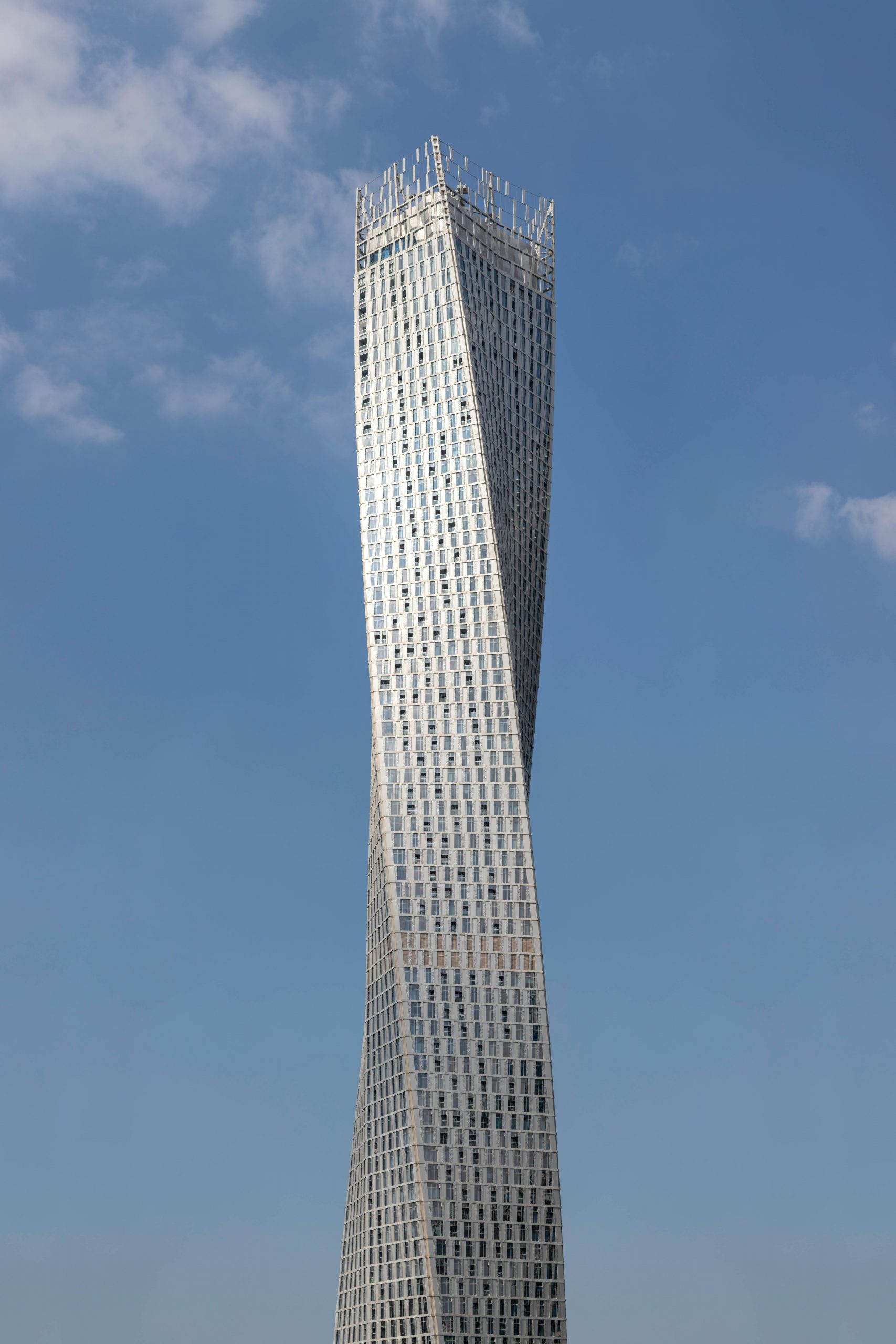
Formerly known as Infinity Tower, Cayan Tower, with its twisted structure, rotating 90 degrees over its height, is one of Dubai’s recognisable architectural landmarks. World renowned as a 73-story, 307-meter skyscraper, it was designed by Skidmore, Owings & Merrill and launched in 2013, serving as a prominent landmark from its location in Dubai Marina and an example of the modern, innovative engineering throughout the United Arab Emirates, symbolic of its forward-thinking drive. When it was completed, the tower was known as the world’s tallest twisted tower. Today it is a residential tower known for its upscale apartments and high-end amenities. Often described as a living, organic structure that brings dynamic movement to the city, a move away from more static, mineral-like structures so often found in the world’s megacities.
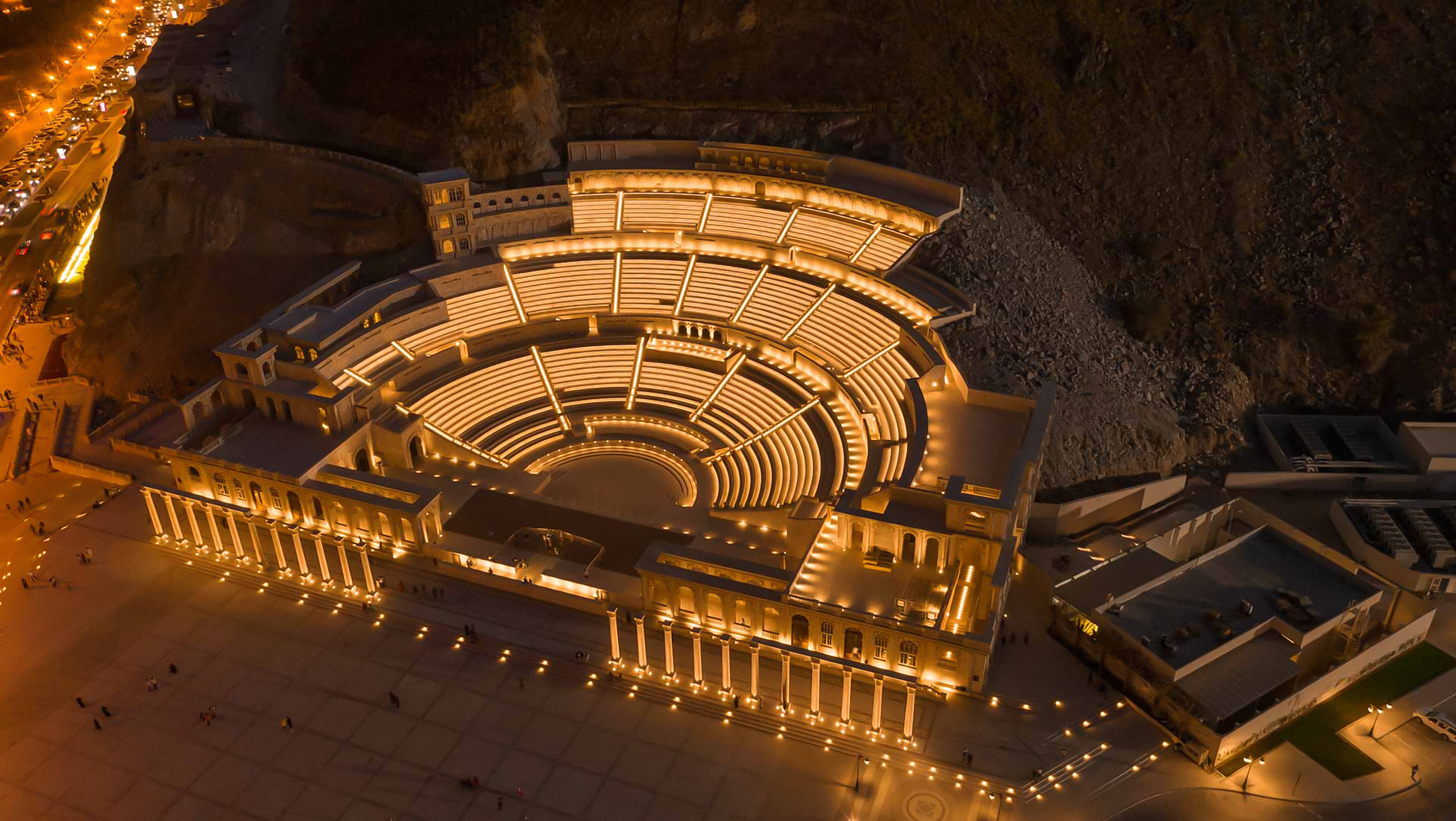
A Roman-style, open-air amphitheatre in the coastal town of Khor Fakkan in the UAE emirate of Sharjah, might be hard to believe. But this impressive structure, which opened in 2020, designed by Jordan-based firm Dar Al Omran, combines classical architecture with modern facilities and features a 3,500-seat capacity, adjacent modern water features and a built-in cooling system. At 1,700-square-metres the cultural venue features the same classic arches and columns that one would find in a Roman amphitheatre throughout the Mediterranean. Its location in the United Arab Emirates is meant to bridge history and diverse cultures.
The structure, which is built into the side of Al Sayed Mountain, features a stone façade with 234 arches and 295 columns. Commissioned by the Ruler of Sharjah, Sultan bin Muhammad Al Qasimi, to bolster the cultural scene in the Eastern region of the Emirate, it also incorporates traditional Middle Eastern and Islamic geometric patterns and uses white limestone that was quarried in Oman to endow it with a local touch. Located directly adjacent to the amphitheater is the Khor Fakkan waterfall, also built into a natural cliff at the foot of Al Sayed Mountain, bridging the impressive man-made cultural venue with the beauty of the area’s natural surroundings.
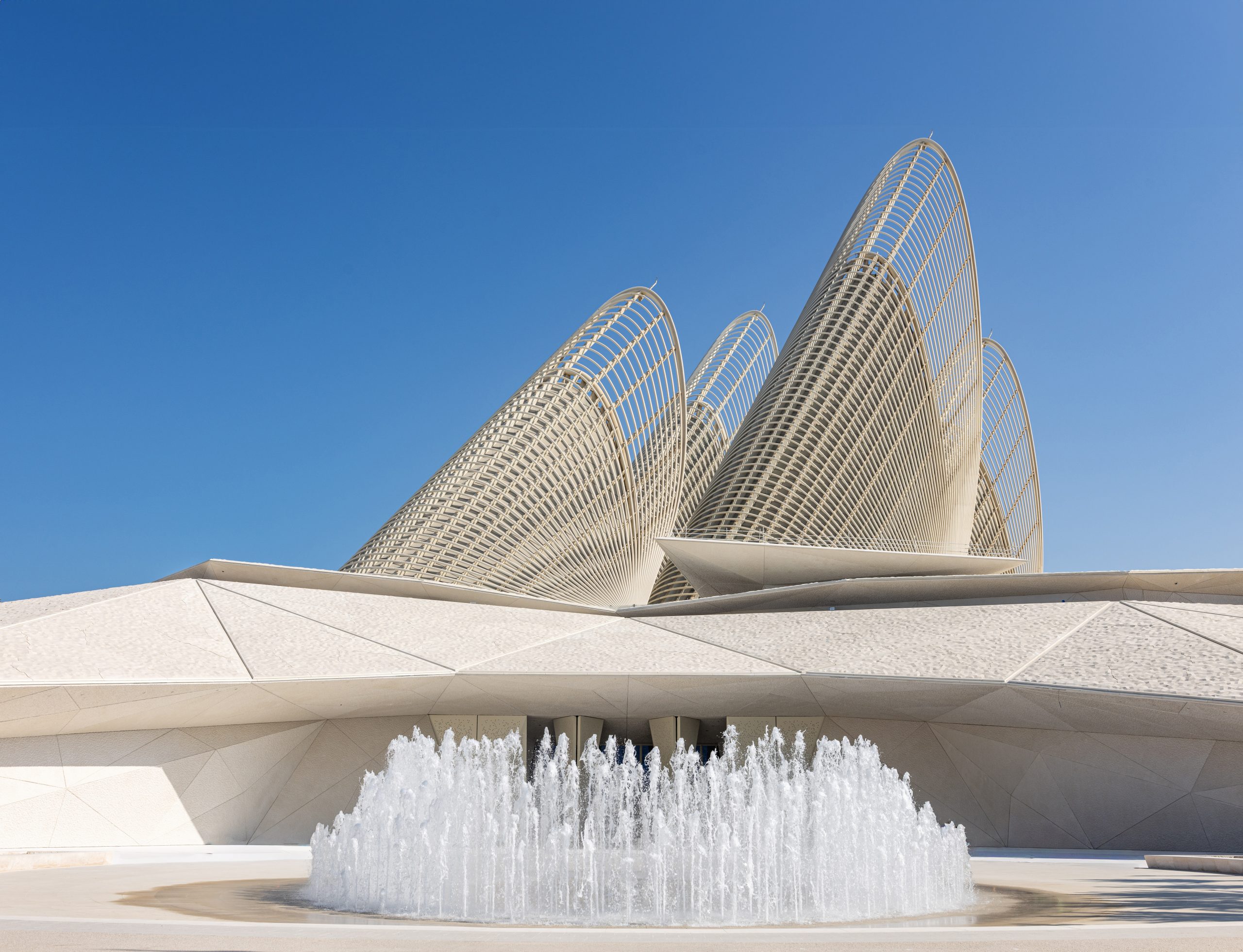
Elegantly projecting upwards towards the sky, the five-falcon wing-shaped lightweight steel towers of Zayed National Museum in Abu Dhabi offer a sense of determination, pride and strength. The museum, which opened to the public on December 3, 2025, a day after the United Arab Emirates’ National Day, was designed by Pritzker Prize-winning architect Lord Norman Foster of Foster + Partners. It is symbolic of the strength, courage, determination and pride of the falcon, the national emblem of the United Arab Emirates.
The museum’s falcon-wing towers act as solar thermal chimneys providing a sustainable, natural cooling system. Inside, the museum consists of a light-filled central atrium known as Al Liwan, an Arabic term referring to a traditional, long, vaulted hall or central courtyard or gathering space, with suspended pod-shaped galleries housing together over 3,000 objects, including ancient and modern artifacts that recount the history and culture of the United Arab Emirates. The building, which had been under construction for 15 years, has quickly become an iconic architectural landmark symbolising the pioneering vision of the UAE’s founder Sheikh Zayed bin Sultan Al Nahyan, who united the country in 1971. The museum reflects the nation’s steadfast move towards progress and innovation while never forgetting its history and heritage.
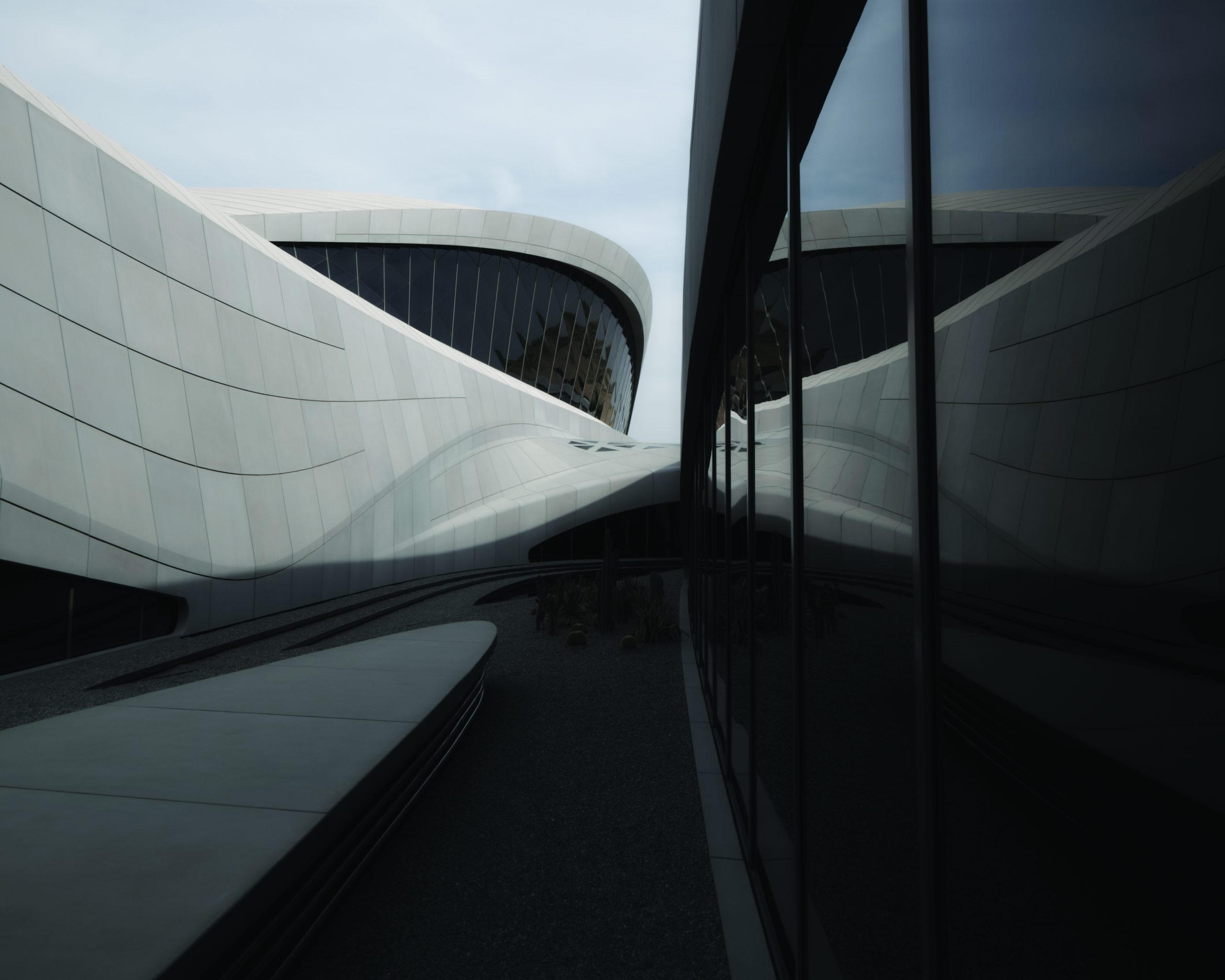
Designed in the manner of a futuristic oasis amid Sharjah’s Al Sajaa Desert, Zaha Hadid Architects designed the 9,000-square-metres BEEAH Headquarters, the central administrative hub for BEEAH Group, a regional leader in sustainability, waste management and green mobility, to resemble the desert sand dunes. The undulating structure has two primary dune volumes – one for management and the other for public departments – connected by a central, naturally ventilated courtyard. The building is powered by a solar array with Tesla battery packs to achieve net-zero emissions and has been designed with sustainable, locally sourced materials, incorporating LEED Platinum standards and AI-integrated technologies to make it a pioneering structure for sustainable design and work.
Incorporating the signature anamorphic forms of other Zaha Hadid designs, BEEAH seems to rise as if from the desert itself. It was one of Dame Hadid’s last designs and still under construction when the legendary architect passed away. The interior, designed by ACPV ARCHITECTS (Antonio Citterio Patricia Viel) is equally impressive and features a 15-meter-high foyer for natural light, flexible workstations and follows the fluid “dune” shape of the exterior divided into two main sections: a central courtyard and public management and administrative areas. One of the structure’s primary dunes features a concrete dome on the north side and facilitates a cascade of natural light inside – a breathtaking vision amid the building’s futuristic white interior designed to echo the surrounding desert landscape, bridging the UAE’s rich natural heritage with its pioneering sense of innovation.
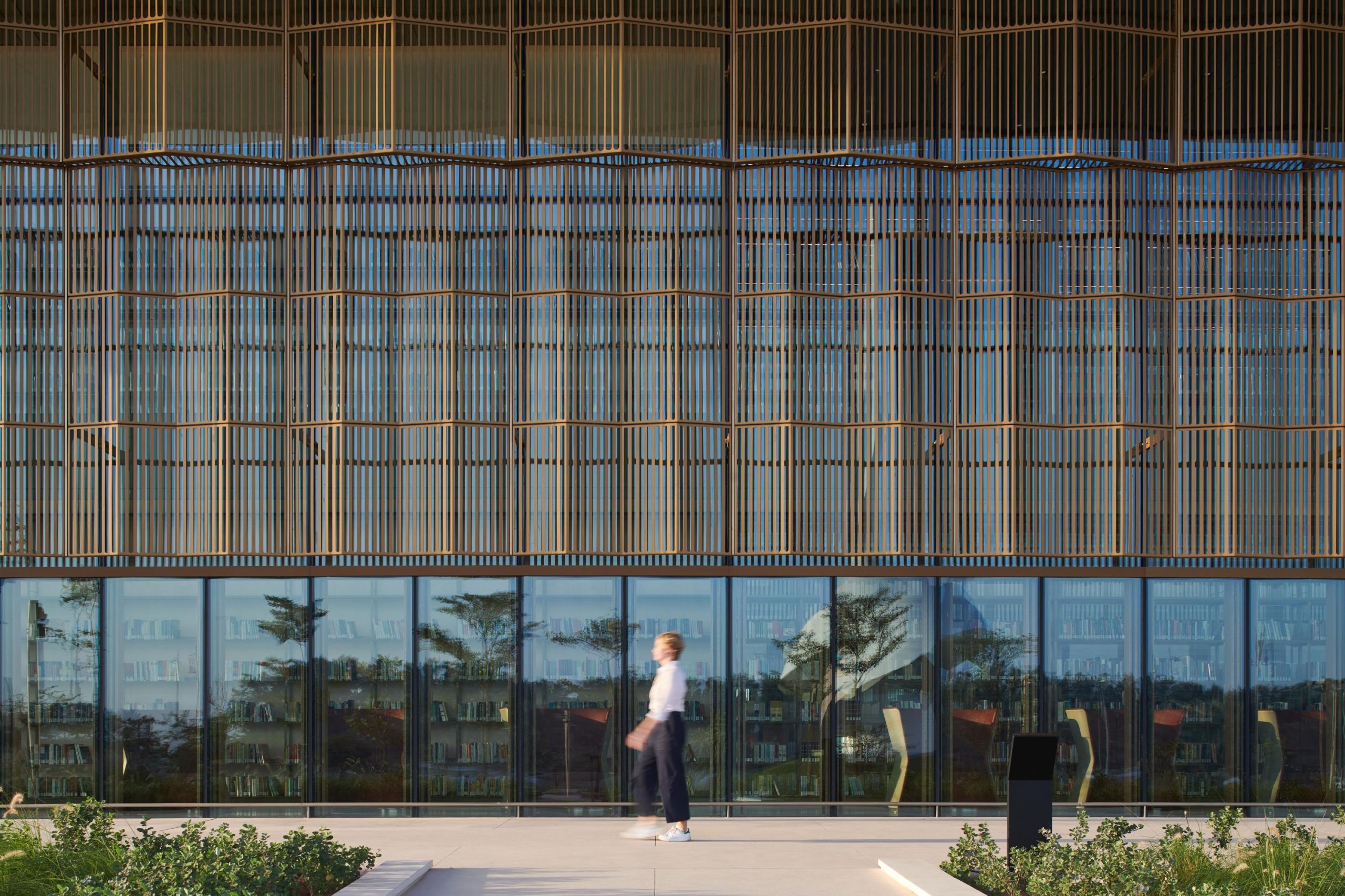
Designed by Foster + Partners and completed in 2020, the Sharjah House of Wisdom is a two-story rectilinear educational and cultural center located on Sharjah International Airport Road in the UAE emirate of Sharjah. Embodying a sense of lightness and clarity, its architectural structure features a large floating 15-meter roof that cantilevers from all sides of a transparent rectangular volume with a glass façade. Inside, a tech-filled 21st-centry library and cultural hub, home to 300,000 physical and digital books, aims to redefine traditional learning spaces while simultaneously blending the consumption of physical and digital knowledge.
The impressive structure was commissioned in 2019 to honour Sharjah’s title as the UNESCO World Book Capital 2019 and is located 10 kilometers from the city and serves as the centerpiece of a new cultural district. The House of Wisdom conceptualises the idea of a library and transforms it into a social hub for learning, supported by technology and innovation. The building’s mesmerising seemingly floating roof shades the façade during most of the day, while, according to the architects, fixed aluminium screens with various densities filter the low sun in the evenings. Additionally, moveable bamboo screens at a low level have been incorporated to provide a sense of privacy for visitors. When not in use, the bamboo screens are left open and forge a visual and physical connection between the striking edifice and the surrounding landscaped gardens.
Images: Unsplash, Pexels and supplied
This cliffside West Coast residence is a thoughtfully layered response to a practical, mid-century-inspired architectural framework, shaped to reflect the lives and values of the people who call it home
West One transforms a villa in Jumeirah Golf Estates that maximises its view of the sunset
Interiors UAE highlights the beauty of materiality and craft by creating furniture that stands the test of time
Tropical Modernism up close
We honor these product designers as part of the id50.
Here are the debuts of the id50 2026.
Take a look at the visionaries from our id50 2026
Meet the global firms with local presence that form a part of this year's id50
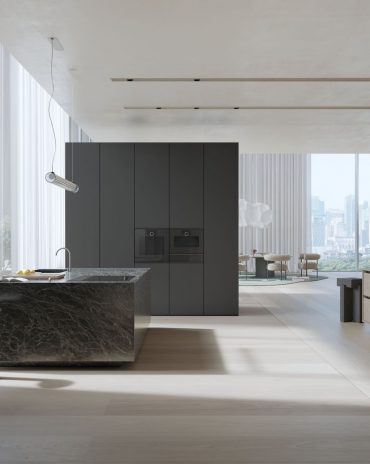
Sleek and clean, the Minimalistic series applies restraint in its design.

This year, we celebrate the interior designers, architects and product designers from the region – from emerging talent to the visionaries and global firms with local presence. We uncover their latest projects and what drew them to the profession.
Read identity magazine's July-August 2026 edition on ISSUU or grab your copy
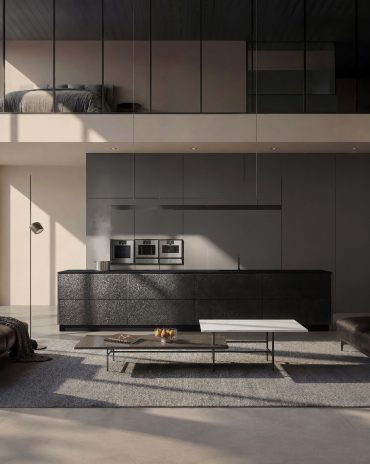
The German kitchen studio discusses why restraint, not statement, is the harder thing to achieve and what that means for the architects and designers it works with.