




French-Australian architect Oliver Du Puy drew inspiration from American painter Mark Rothko and the work of Japanese architect Kazuo Shinohara to create this Melbourne sanctuary for a busy woman
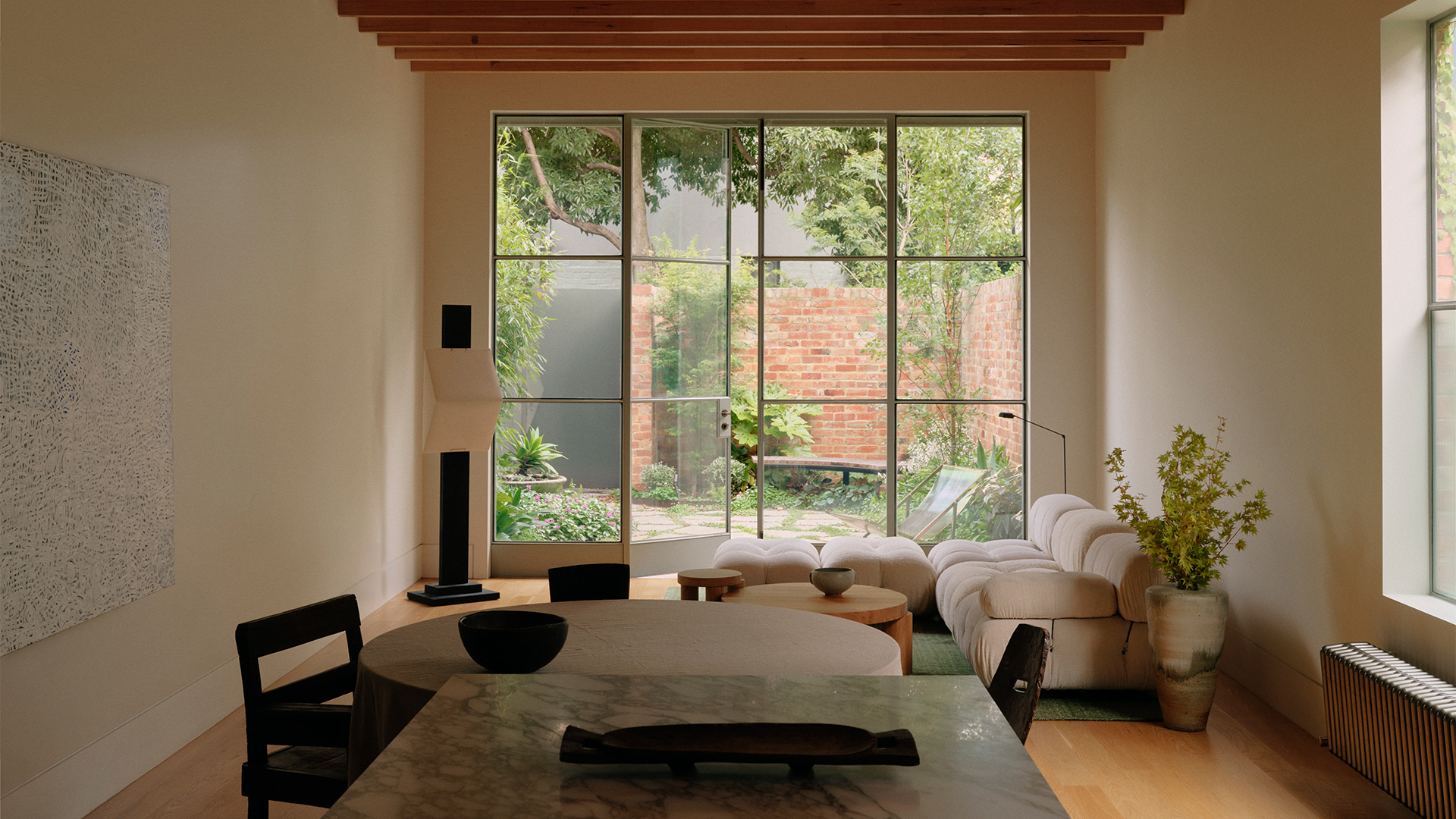



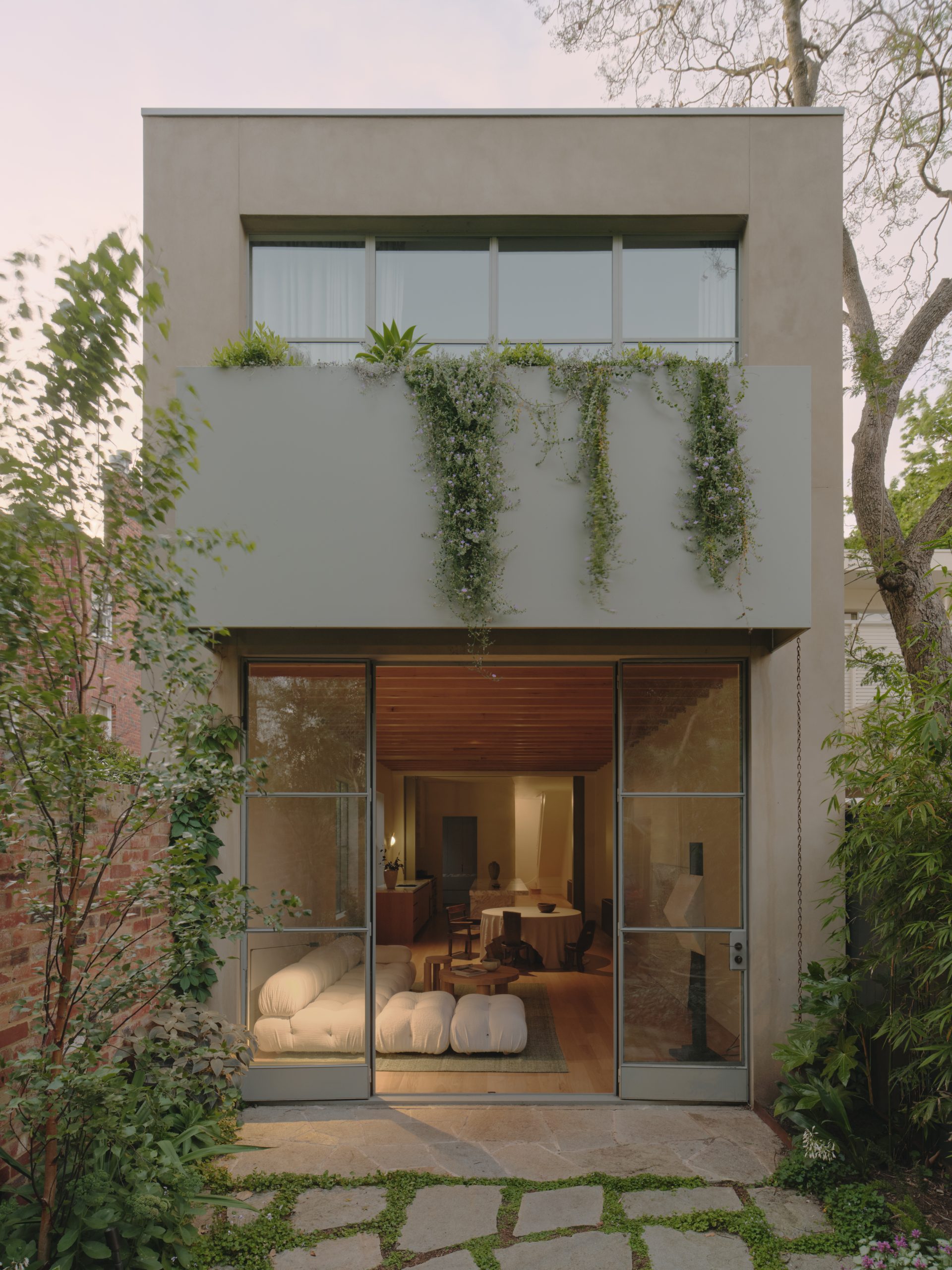
The architect used an expressed timber ceiling and referred to the work of Kazuo Shinohara to complete his creative vision
After growing up between Paris and Melbourne, Australia, Oliver Du Puy trained under Norman Foster in London, as well as Kengo Kuma and Jun’ya Ishigami in Tokyo. Today, he is based in Sydney, where he runs his eponymous architecture and interiors studio. These diverse influences are all reflected in one of his latest endeavours: a historic Victorian terrace house from 1889 by acclaimed firm Reed, Henderson and Smart (now Bates Smart). Originally built for the foreman of Mutual Store Ltd, Melbourne’s first department store (established in 1872), the property was transformed for a New Zealand woman with two young adult children and a West Highland terrier. Du Puy took care of reconfiguring and extending the home while celebrating many of the original period details that needed to be reintroduced or revealed again after being covered up or removed throughout time, such as the ceiling roses, fireplaces and cornices. Meanwhile, the architect delicately added contemporary touches throughout.

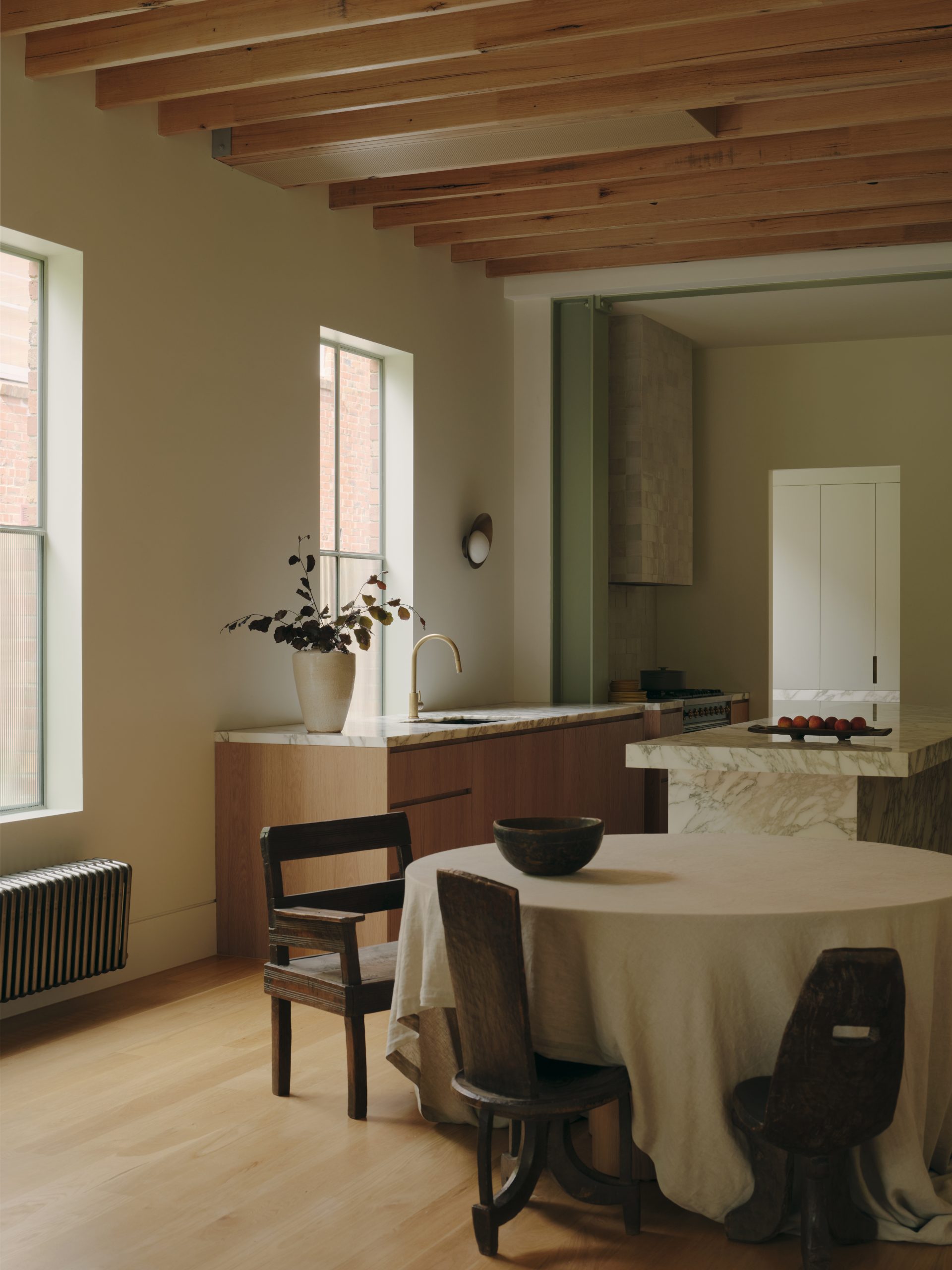
Rothko’s work helped inform the colour field gradations throughout the home
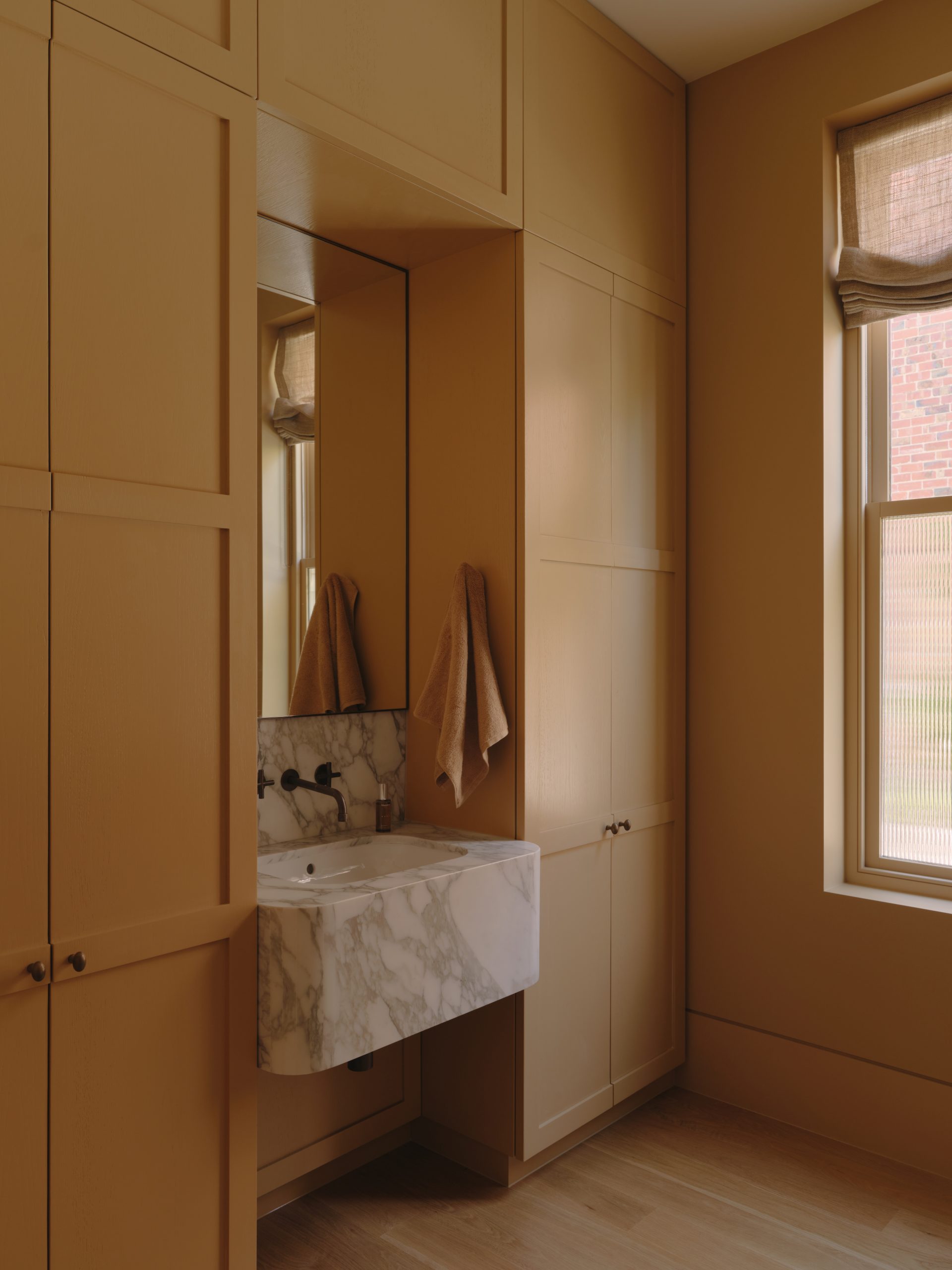
Du Puy used natural, breathable internal finishes, such as custom waterproof béton ciré (with origins in North Africa) in the bathrooms, to help regulate air quality
“In the words of the Victorian-era art critic John Ruskin, ‘We don’t want our buildings merely to shelter us; we also want them to speak to us’,’” says Du Puy, who honoured this statement. Attached on one side, the site of the house borders the Royal Botanic Gardens in the inner Melbourne suburb of South Yarra. Light-filled, serene and warm, the spaces exude a tranquil energy while being vibrant at the same time. “[The homes we design] are a reprieve from the stresses of everyday life, where one can find balance, wellness and comfort,” the architect explains. “We have a particular interest in the domestic rituals of living (such as bathing and cooking).”
Du Puy used natural, breathable internal finishes, such as lime-based paints from Farrow & Ball and custom waterproof béton ciré (with origins in North Africa) in the bathrooms, to help regulate air quality. “Our philosophy is centred on eliminating the harmful toxins and substances prevalent in most new construction and providing healthier alternatives derived from nature,” he says.
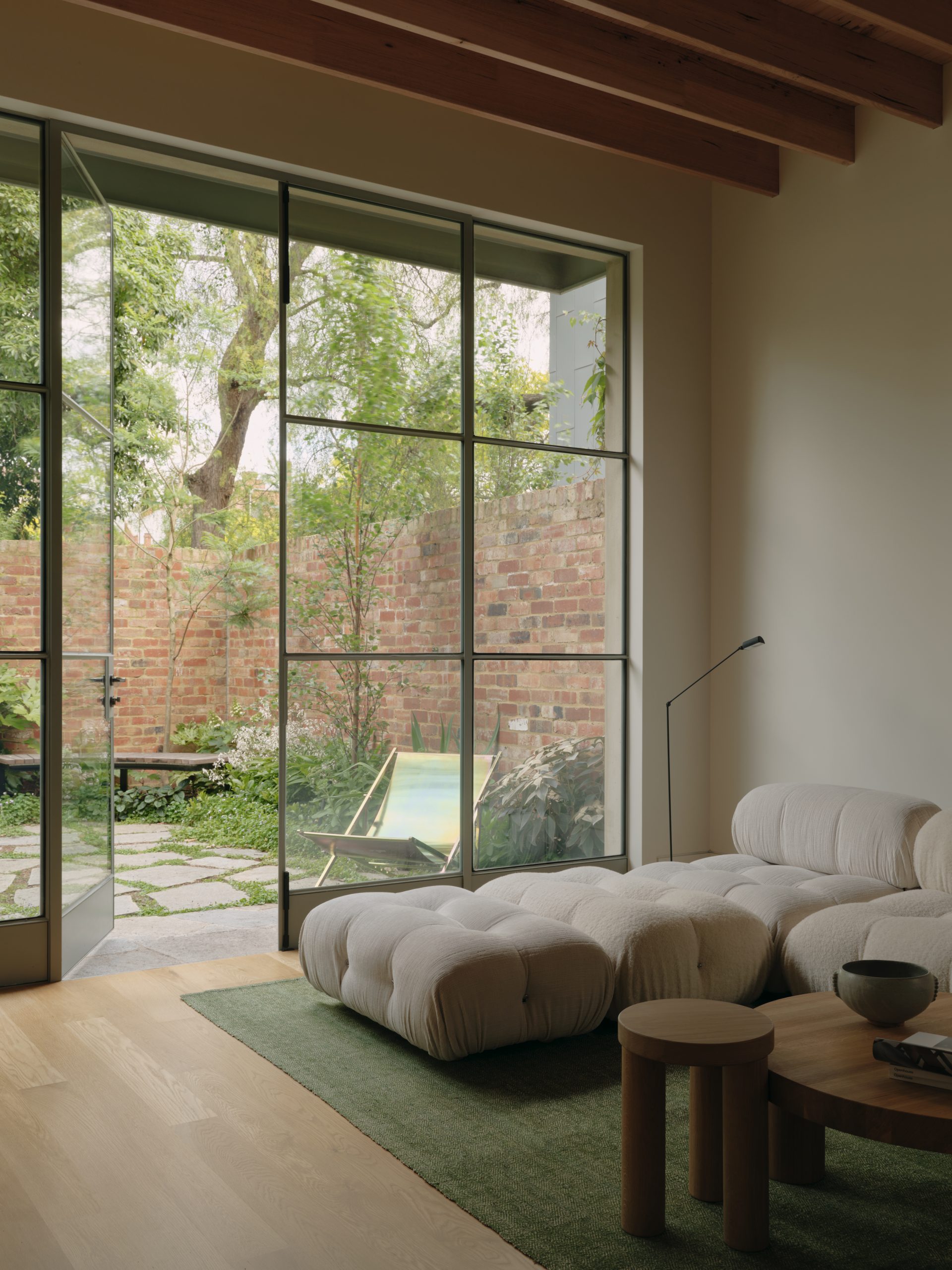
Light-filled, serene and warm, the spaces exude a tranquil energy
Optimising the environmental performance of the home, and minimising embodied energies and construction waste, was also key. For example, the original clay bricks that were removed during the work were salvaged and reused in the project. Solar photovoltaic power and verdant views – to create visual connection to the landscape thanks to the careful placement of new steel windows and doors utilising a combination of clear and opaque glazing – reflect the sustainable character of the house, too. “Rothko’s work helped inform the colour field gradations throughout the home – spaces within spaces – grey-greens, mustards and pinks,” says Du Puy, who collaborated with Mardi Ola for the palette.
Drawing inspiration from his time working in Japan, the architect opted for an expressed timber ceiling and referred to the work of Kazuo Shinohara to complete his creative vision. “I was particularly interested in exploring the Japanese architect’s symmetrical spatial compositions but at the same time in finding the poetic quality that fuses simplicity and surprise, the ordered and the unexpected,” says Du Puy. “This manifests through gentle expressions of colour, curves, expressed structure and heritage features.” Perfectly balancing proportion, material and light, this home “feels like a sanctuary from the outside world,” concludes the architect.
View more homes here.
Poliform Blends Seamlessly with this Branded Residence
Bold, tactile pieces with raw material honesty
The Cut arrives at IF HUB, offering a new perspective on kitchen design through its focus on materiality, craftsmanship and sensory experiences
Opened in 1987, the King Fahad Sports City Stadium in Riyadh is undergoing a major renovation designed by Populous to transform it into a state-of-the-art venue for the 2034 FIFA World Cup
This cliffside West Coast residence is a thoughtfully layered response to a practical, mid-century-inspired architectural framework, shaped to reflect the lives and values of the people who call it home
West One transforms a villa in Jumeirah Golf Estates that maximises its view of the sunset
Interiors UAE highlights the beauty of materiality and craft by creating furniture that stands the test of time
Tropical Modernism up close
We honor these product designers as part of the id50.
Here are the debuts of the id50 2026.
Take a look at the visionaries from our id50 2026

Meet the global firms with local presence that form a part of this year's id50