




Located in Jumeirah Golf Estates, Villa Limni offers an adaptive, fluid minimalist design that evolves with its surroundings and the lives of its inhabitants
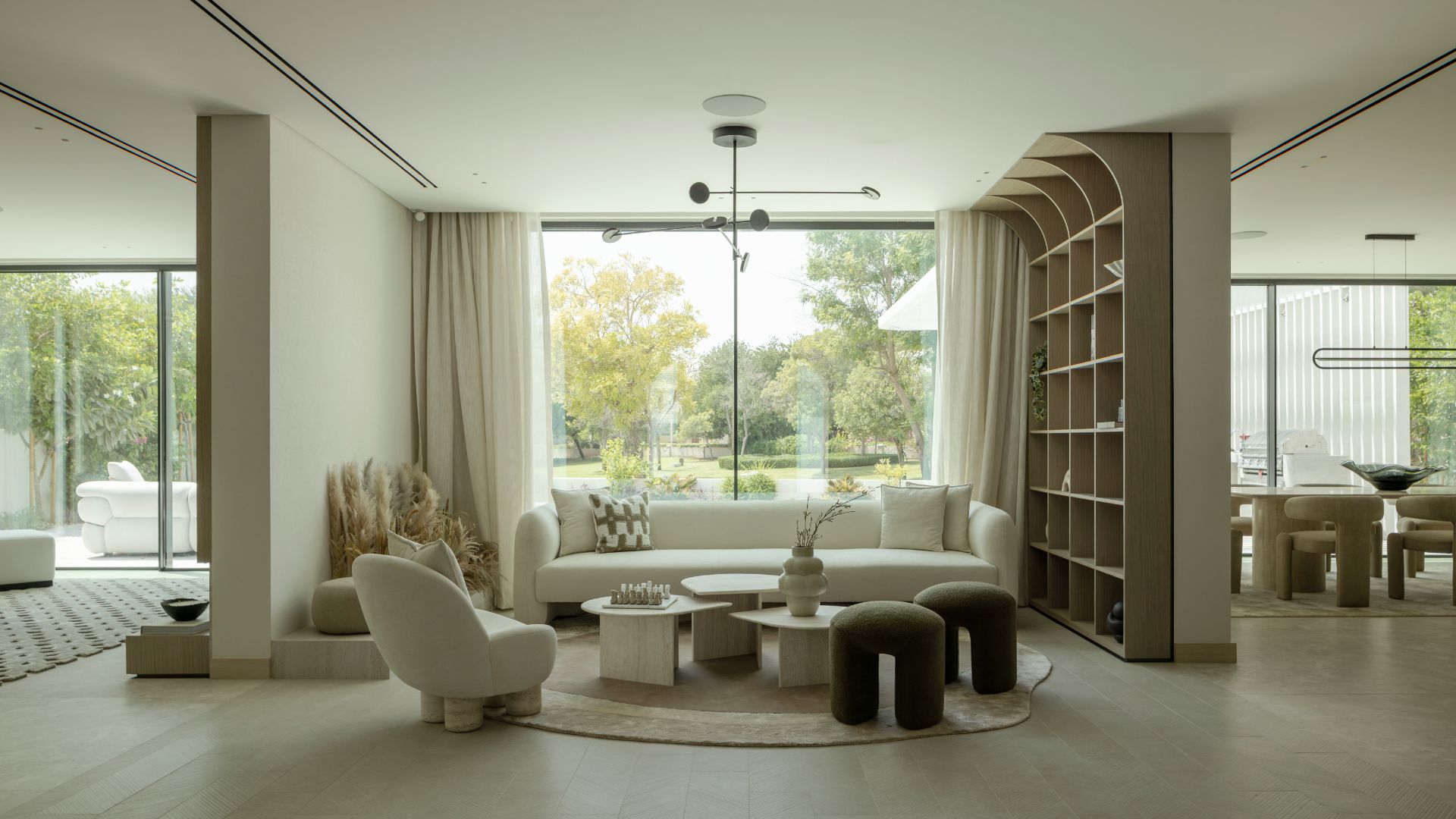



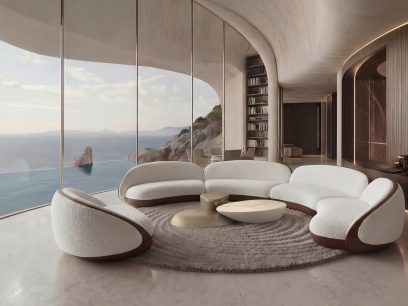
Located in the verdant Dubai neighborhood of Jumeirah Golf Estates, the new Villa Limni, designed by Dubai-based Grounded Design, explores how architecture can anticipate the future while maintaining its roots in the human experience of space and contemporary design. The structure, once a dated villa, has been reimagined to evolve a typical domestic dwelling into one that resembles an evolving organism – one that transforms by responding to the shifting lives of its inhabitants and the elements of light and technology. This serene residential retreat, heightened by a design favouring the inclusion of soft, sculptural organic forms, aims to follow a different creative logic: one where design aims to strike a balance between the permanence of a home and adaptability. As soon as one enters the home, the experience is one that is deliberately fluid filled with open spaces that move from one room to the next in a seemingly seamless dialogue of form and function.
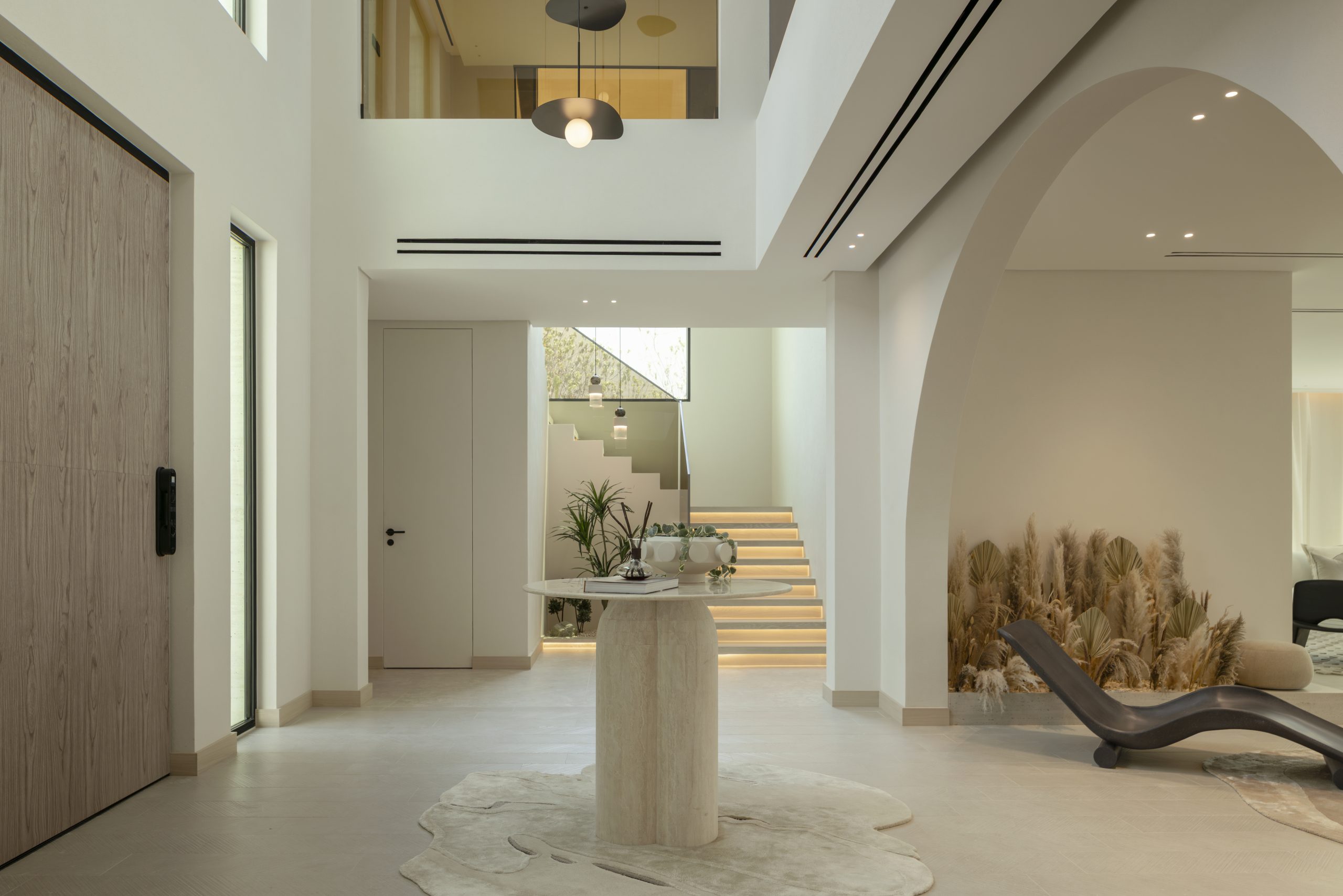
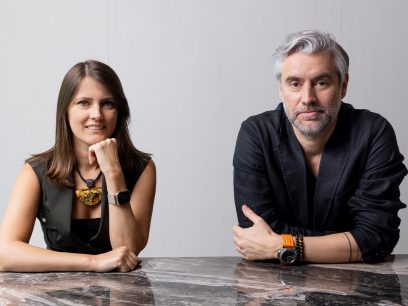
Crafted to exude the experience of permanence, clarity, and emotional resonance, Grounded Design offers a design that feels rooted, reassuring and open to what the future may bring. “We approached the project not just as a physical upgrade, but as a curatorial exercise in what the future of residential luxury should feel like,” explains Bani Singhi, founder of Grounded Design, a design firm established in 2017 with an ethos rooted in Singh’s Scandinavian heritage dedicated to creating balanced designs. “This is a house that had good bones – it just needed a new language.”
Rather than merely renovate, the design team set out to rethink what it means to live well. Their goal: to create a home that balances architectural precision with sensorial intimacy, one that elevates every moment of daily life, while quietly increasing its long-term value. Over nine months, the house was stripped back, reshaped, and thoughtfully reassembled into a refined statement of spatial fluency.
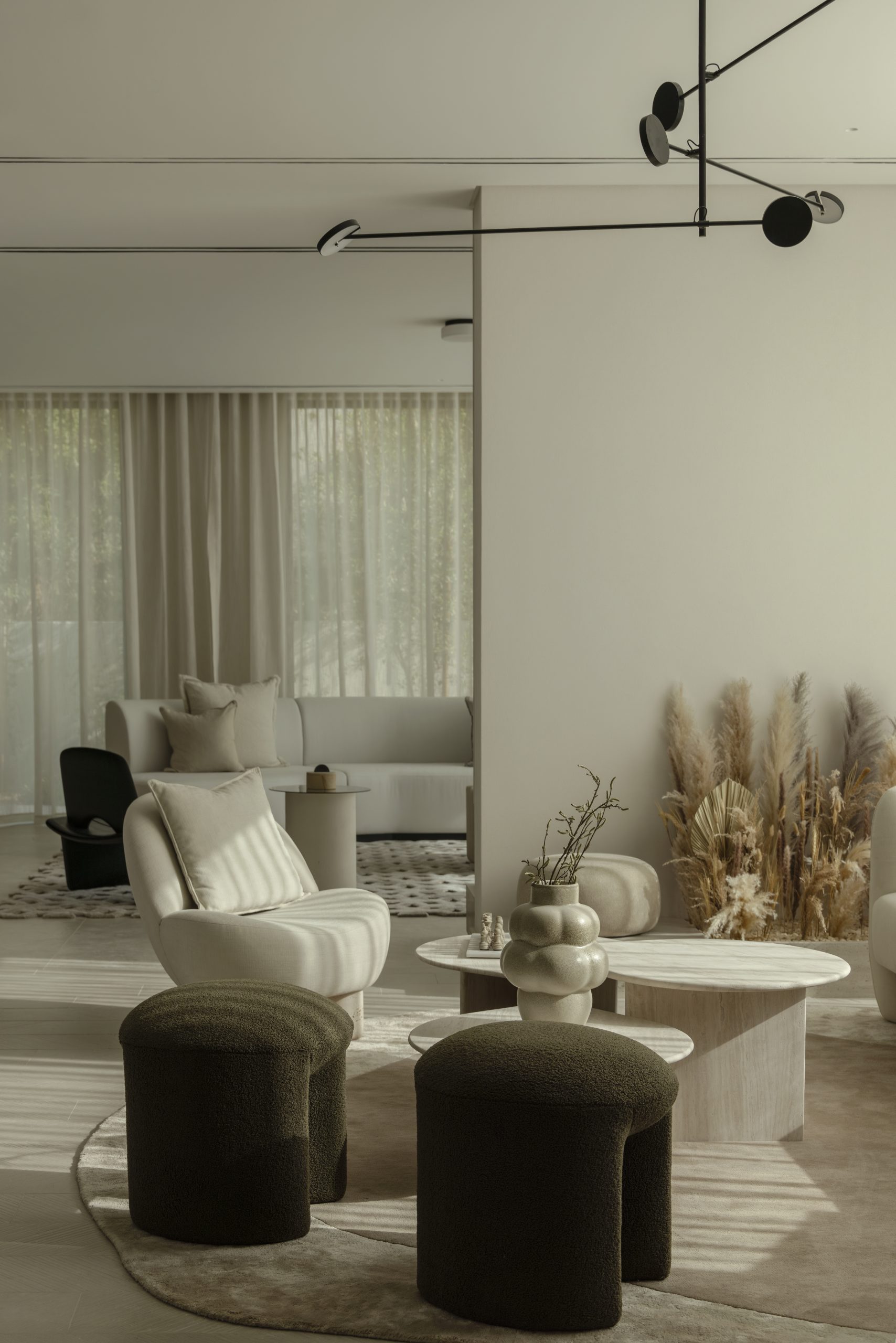
“The inspiration was to design a home that evolves with its occupants rather than impresses at first glance; a place shaped by light, time, and daily rituals, where restraint allows emotion, memory, and future living patterns to quietly take root,” explains Bani Singhi, founder of Grounded Design.
The villa’s redesign centers on the principle of continuity. Spaces have been composed not as specific rooms with fixed designations but as fluid areas that are capable of definition over time. This leads the design to flow intuitively, guided by the natural elements of light and proportion rather than a desire for enclosed privacy. Grounded Design has crafted, almost like a choreography, each line and form to cater to change fostering a sense of movement in the space. This is a means for designing not just the present, but for what the future will bring, for the unpredictable yet certain element of change.
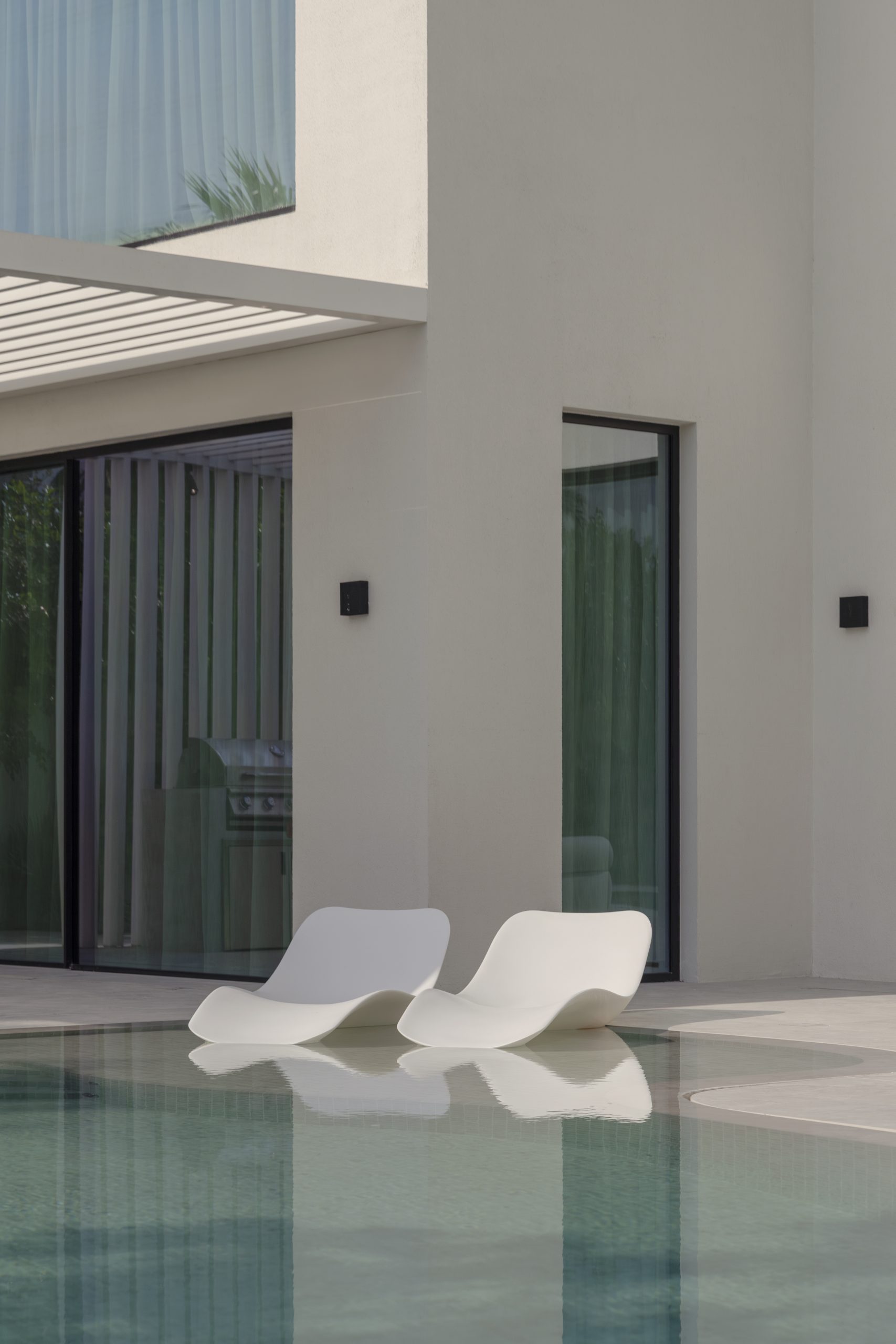
“Architecture that endures is not the one that resists time,” says Singh in the villa’s press release. “It’s one that allows time to happen to it – to gather history, use and emotion without losing coherence.” The materials used offer a gentle radiance to the space presenting bright, with soft, muted tones of sand, ivory and ash providing an emotional neutrality that roots the texture of the materials and the emotional state of the occupants. Travertine, textured porcelain, and pale timber have been incorporated for their ability to exude light and weather it seamlessly. Materials have been used as strategies for longevity rather than mere ornamentation. Extending from the interior to the terrace are floors in large format porcelain, while in the villa’s private space the grain of wood offers intimacy and grounding. The façade of the structure is made with travertine cladding to distribute the desert sun with a warm glow.
Key design notes include a double-height volume that opens towards the garden, connecting the interior and exterior spaces and both levels of the house. There’s also a sculptural stair that folds upwards beside a tall plane of glass, adding an interplay of form and function, and a small Zen garden outside provides a moment of meditative calm – a rest area between the fluid movement inside and the expansive environment outside.
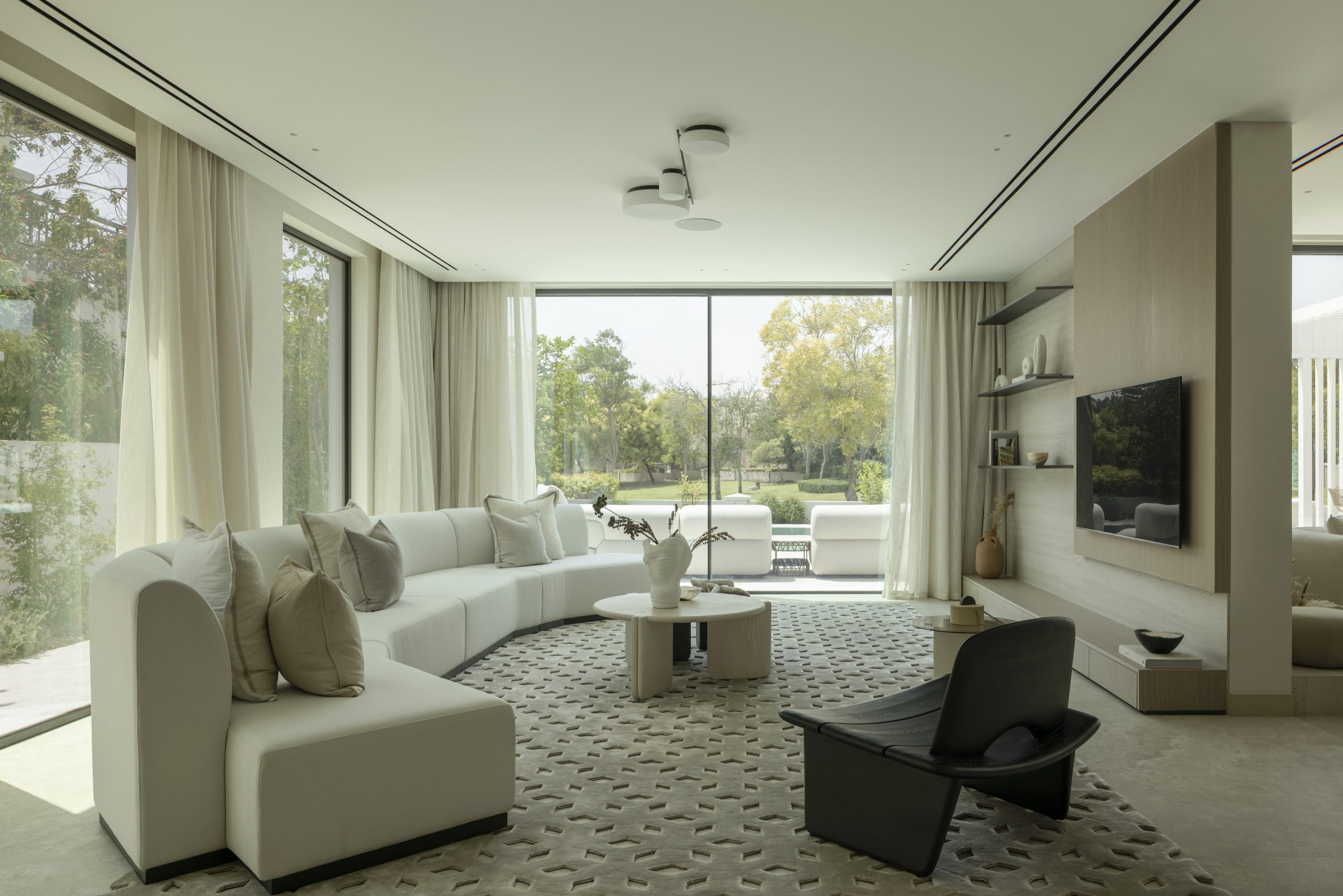
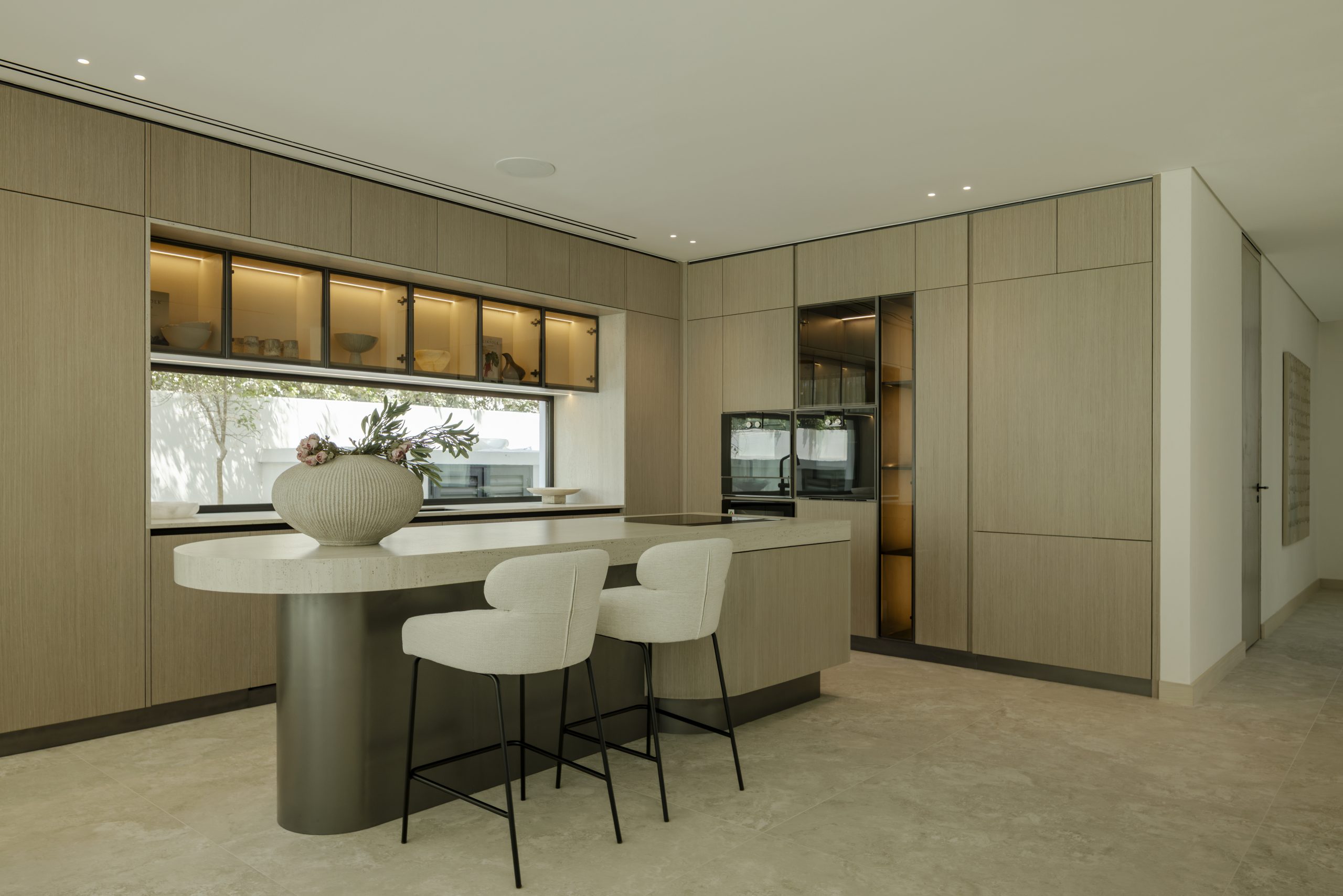
The living and dining areas read as a single continuous field, blurred by reflections and framed by greenery. In the kitchen, a strip of horizontal glazing replaces the conventional backsplash, transforming the act of cooking into a dialogue with the outdoors. Upstairs, private rooms adopt the same sense of fluid connection, with the master suite flowing from the function of sleeping to bathing to dressing in one continuous gesture. Meanwhile, a central multipurpose space anchors the upstairs plan, overlooking both the interior void and the garden canopy. Natural light has been used as a crucial design component running through the villa at various intervals to define volume, sculpts surfaces, and creates transitions in mood during different times of the day.
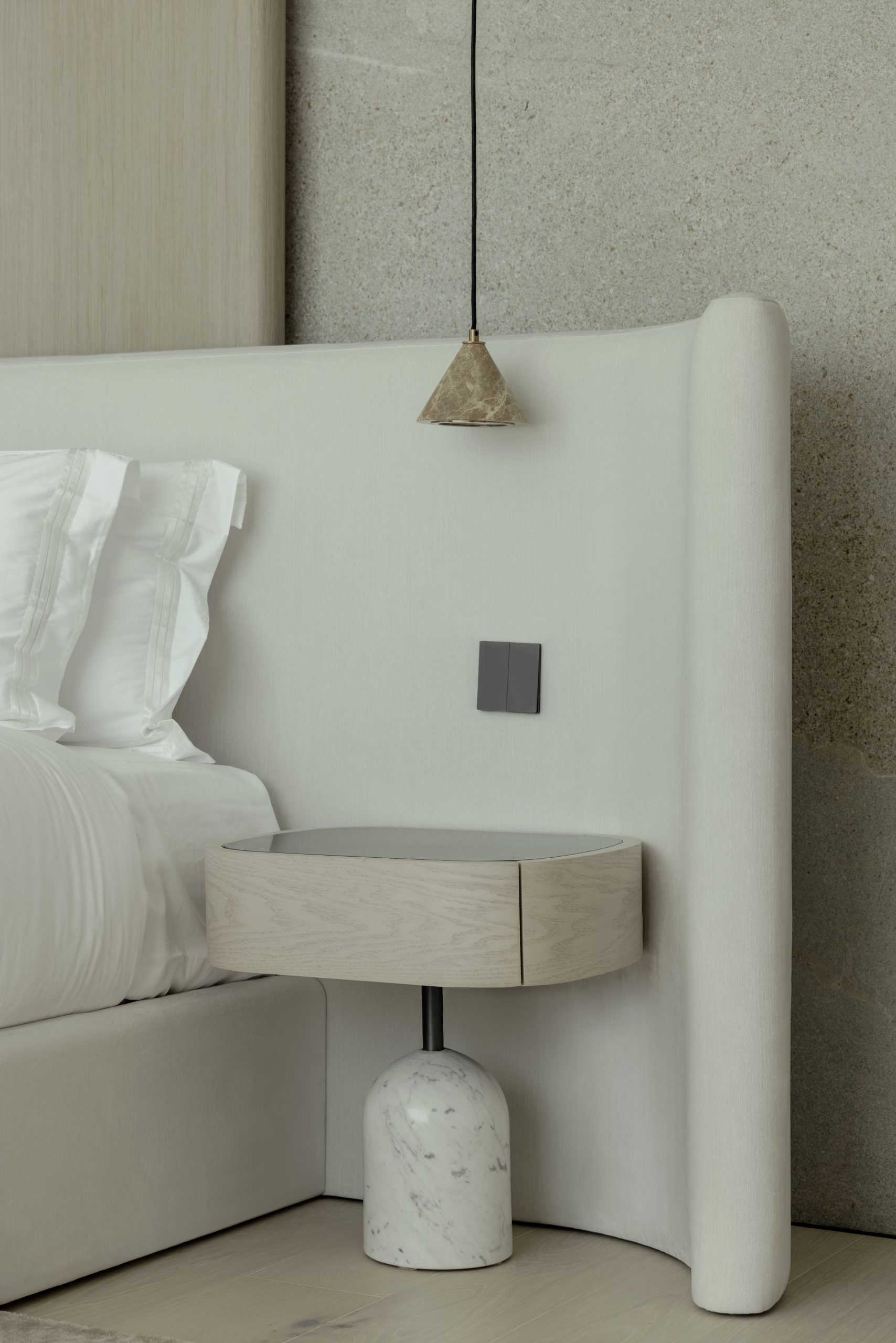
The attention given to the temporality of light transforms the project from a static object into a living environment. A discreet, nearly invisible system of technology further enhances the spaces, with a smart-home framework that manages the lighting, temperature, and security through an intuitive interface. At the same time the villa’s environmental consciousness can be found through water systems enabled through smart irrigation and conservation fixtures meaning that the design doesn’t end with the villa – but extends outwards encompassing the natural landscape.
The design of Villa Limni caters to thoughtful movement and gestures as well as Grounded Design’s ambition in the region: to foster a new, subdued language for contemporary architecture where the progress of technology and fast-paced daily life is balanced with permanence. It also offers a refined counterpoint to the flamboyant excess largely associated with luxury homes in the Gulf. Here the value of minimalism lies in the coherence and balance it brings. Minimalism here allows natural light, material, technology and the inhabitants to converge in a balance of past, present and the future.
Photography by Kelly Tooze
Set a stone’s throw away from Hyde Park, the Six Senses London has wellness at its heart
This home in Mumbai, India is an ode to Italian design
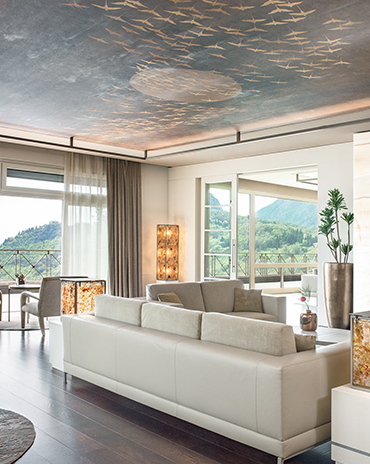
Five-star luxury property Lefay Resort & SPA Lago di Garda in Gargnano, Italy, features a renovation by Studio Apostoli and the Lefay Project Team blending contemporary luxury with natural materials
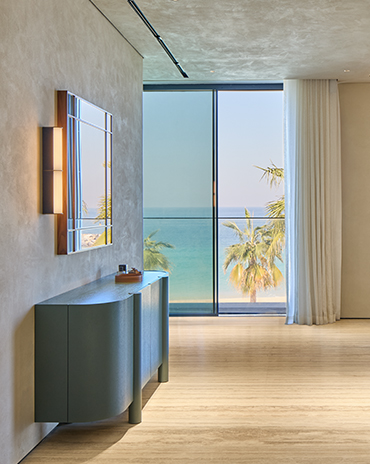
This villa in Jumeirah Bay by Delfina Design utilises natural materials to enhance its position as a beachfront home
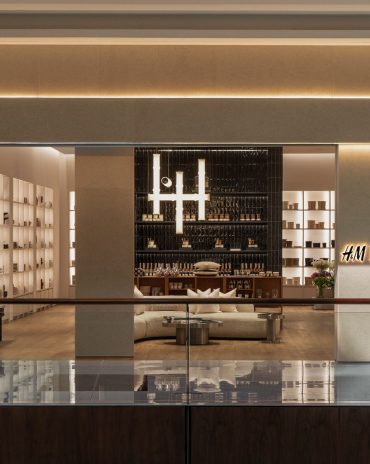
The store was unveiled on 23 May, marking a significant milestone for the brand in the region.
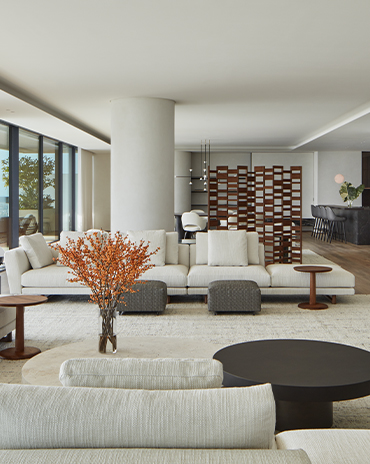
Studio M. completes a residence that echoes the building’s refined architecture
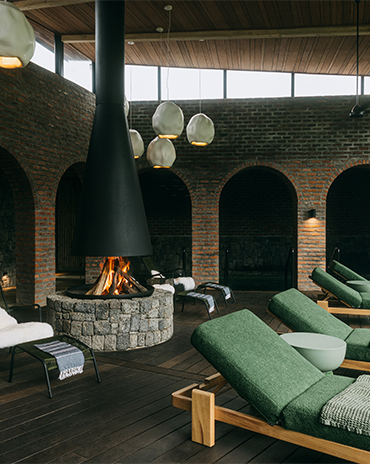
These design-led hotels offer inspiration at every turn
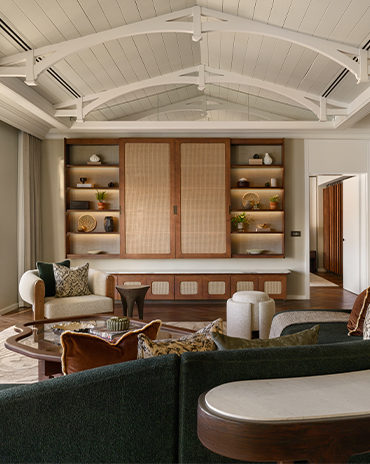
LW Design completes a sensitive reimagining of the iconic Table Bay Hotel at the V&A Waterfront in Cape Town, South Africa
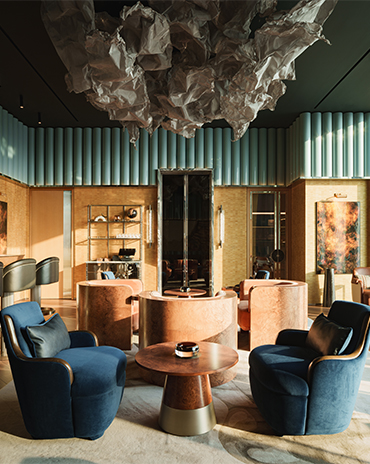
This new, refined lounge showcases spectacular Dubai skyline views with style
identity hosted a live panel in collaboration with IF Hub on creating intelligent and resilient design at their showroom
We take a look at how Nammos Dubai translated the spirit of Mykonos at its outpost at the Four Seasons Resort at Jumeirah Beach
Emirati founded and owned interior design studio Lodge completes two distinct majlises