




As developments in Saudi Arabia continue to increase, we consider how Japanese design principles are shaping sustainable urban development in the kingdom



Saudi Arabia is in the midst of a building boom, with developments springing up across the kingdom. In common with other countries in the region, an increasing number of projects now celebrate Arabic heritage, architecture and culture, yet other design philosophies remain influential throughout the Saudi built environment.
Among these, the Japanese design approach has become an increasingly prominent framework. Characterised by clarity of intent, formal simplicity and sophisticated restraint, the philosophy values coherence, efficiency and contextual sensitivity over expressive excess. These principles are evident in some of Saudi Arabia’s most ambitious projects, where clear vision, rigorous execution and resilience to environmental and urban conditions are shaping more sustainable and enduring models of vertical urbanity and iconic development.
Importantly, the intent and simplicity emphasised by the Japanese approach is finding favour with key developers active in Saudi Arabia, who apply it to ensure that every detail has a purpose and every element belongs to its context. This philosophy embeds traditional aesthetics such as minimalism and harmony with nature – and in a region undergoing rapid urban growth, this disciplined methodology delivers architecture that performs technically and respects the country’s cultural identity.
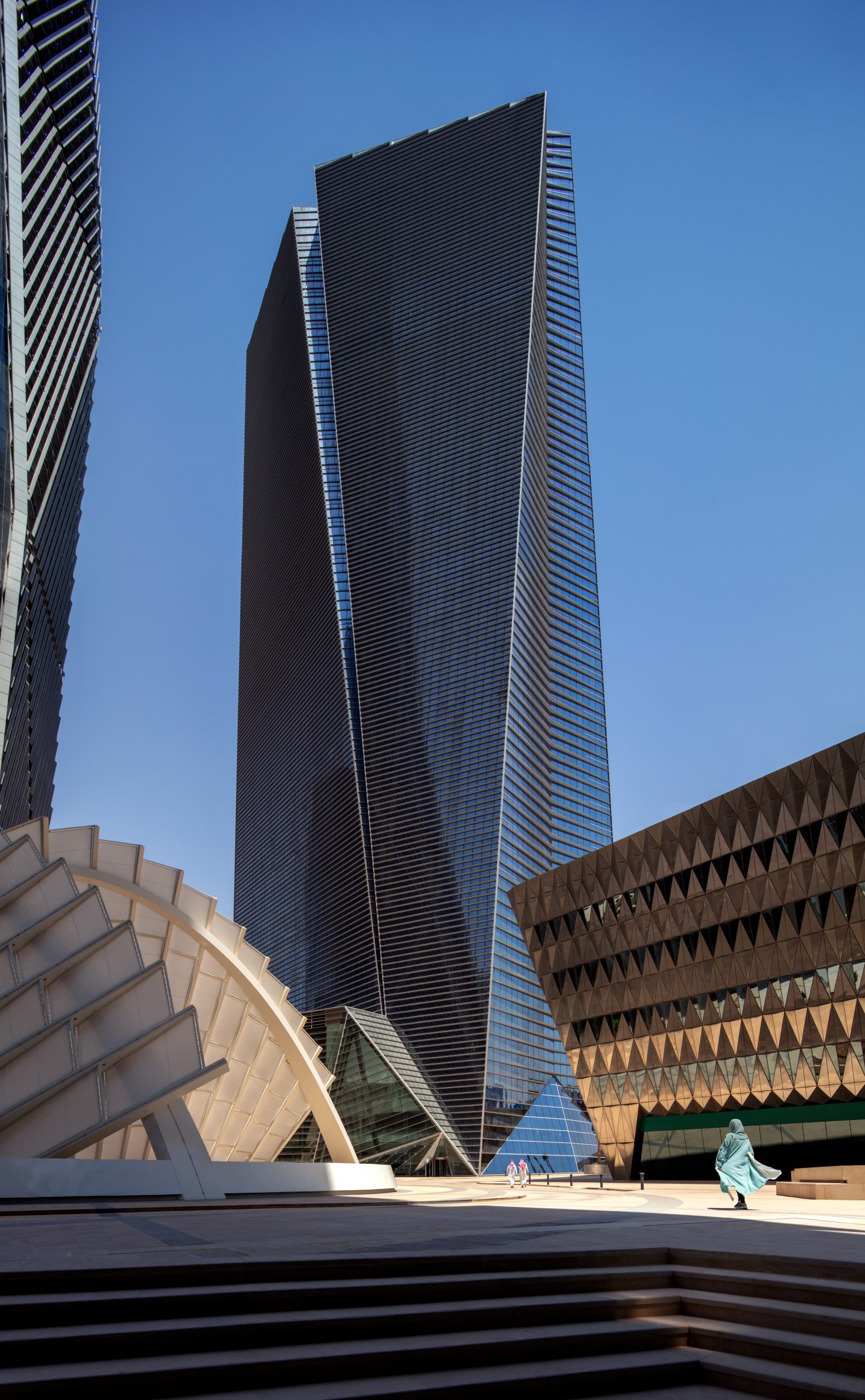
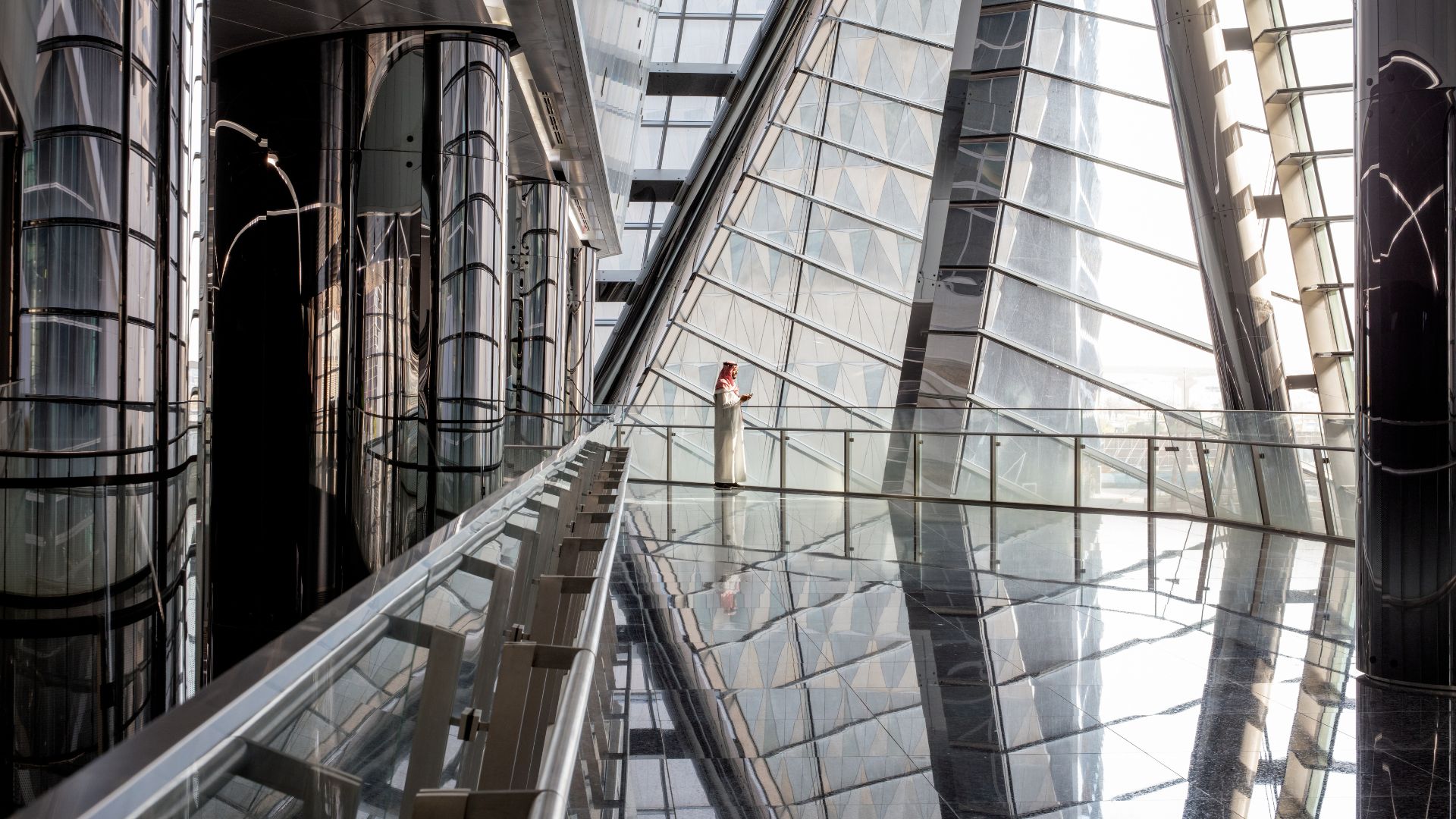
Projects such as Tadawul Tower in Riyadh, designed by Nikken Sekkei and developed and managed by Tadawul Real Estate Company, showcase Japanese principles translated into practice. Responding to the stringent urban design guidelines of the King Abdullah Financial District (KAFD), Tadawul Tower establishes a distinct architectural identity through its faceted, crystalline geometry, which not only complies with prescribed parameters but also operates as an environmental mediator. The crystal-shaped form carefully calibrates solar exposure in response to local climatic conditions, demonstrating how formal articulation can be directly linked to performance.
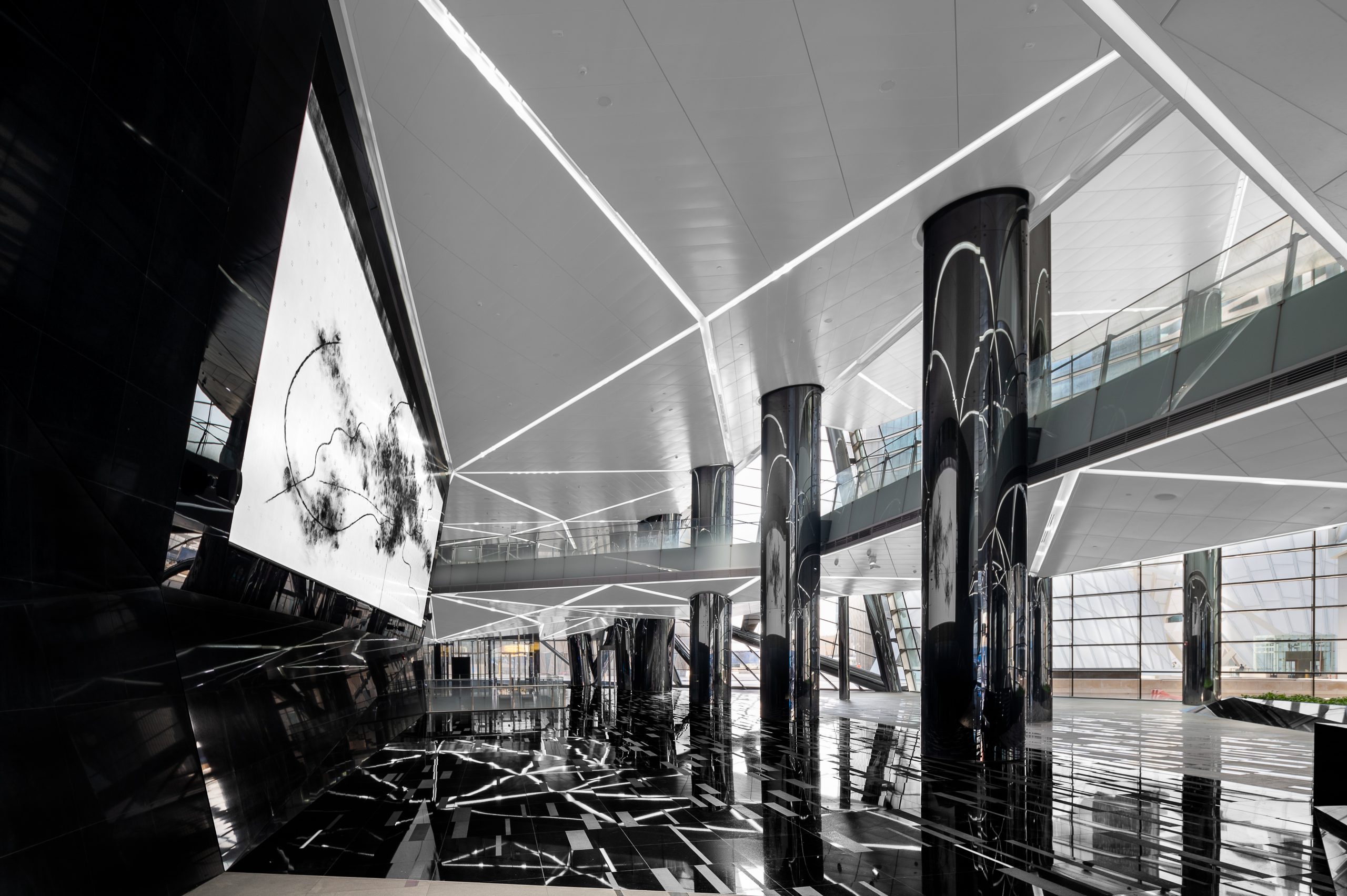
These guidelines, known as the ‘facetted form’, abstract Riyadh’s natural wadis and fuse them with Islamic geometric principles. The design team behind Tadawul Tower reinterpreted this concept through the lens of Japanese culture as ‘origami’, creating a crystalline exterior form that appears as if a single sheet of glass were folded, with interior spaces organised as a corresponding polyhedral composition. Complementing this approach, horizontal louvres and high-performance glazing mitigate heat gain, while a strategically positioned internal void introduces natural daylight and fosters a sense of spatial calm. These elements are integral to the building’s environmental strategy, enhancing energy efficiency and occupant comfort rather than functioning as applied ornamentation. In contrast to many surrounding developments, the project embodies sophisticated restraint, relying on precisely angled surfaces to achieve an understated yet highly integrated presence within its urban context.
It should be noted that Middle Eastern applications of the Japanese principles of clarity, simplicity and harmony with nature are not new. Another Nikken Sekkei project, the Islamic Development Bank Headquarters Building was completed in 1993 and reflected a thorough understanding of the local climate, culture and religion, as well as spatial concepts and customs unique to Islamic architecture.
Looking to the future, it is certain that one fundamental will remain: regardless of the overarching architectural approach, the region’s successful buildings will be contextually responsive – only then can they balance environmental performance, human experience and enduring urban value.
Maria Petrova, Co-founder of Zahar Paints talks about the emerging trend
Summer finds that evoke a sense of rest and relaxation
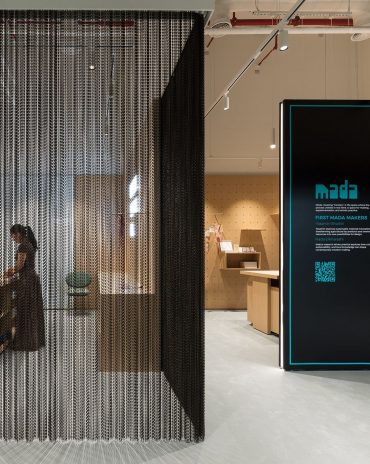
Doha Design District’s new platform, ‘Mada and Sada’, is less about what creativity produces and more about what makes it possible.
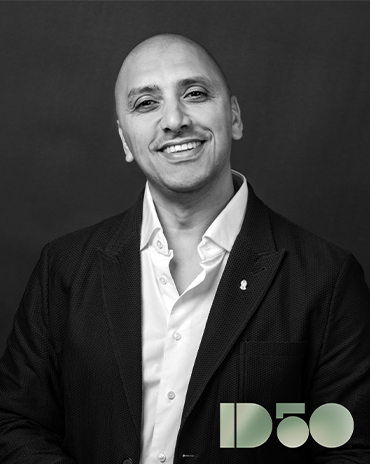
Meet Waleed Arafa, Founder and Principal, Dar Arafa Architecture
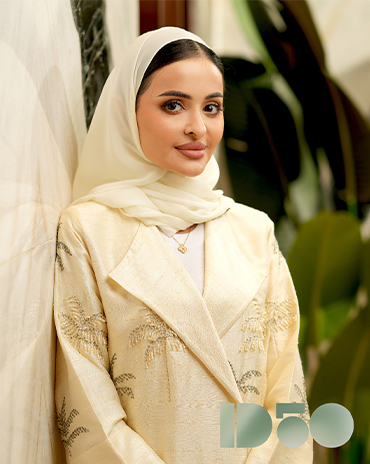
Meet Reem Al Qamzi, Founder, Rqitects
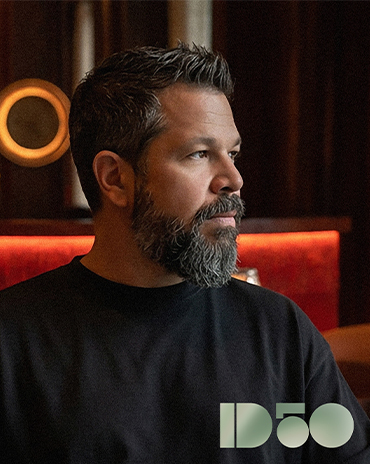
Meet Firas Alsahin, Co-Founder and Design Director, 4SPACE Design
Meet Kristina Zanic, Founder, Kristina Zanic Consultants
Meet Ghida Chehab, Founder, Studio Baab
Meet Agata Kurzela, Creative Director, Agata Kurzela Studio
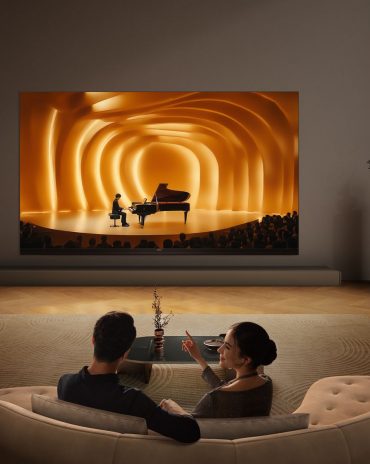
We take you through the design aspects of the TCL X11L
Meet Pallavi Dean, Founder and Creative Director, Roar
Meet Vera Dieckmann, Founder and Creative Director, XO Atelier